Showing posts with label lentils. Show all posts

November 11, 2014

Uttapam

DSC_0432
American uttapam (salt, pepper, cumin seeds, cilantro, diced onions and bell peppers, cheese)
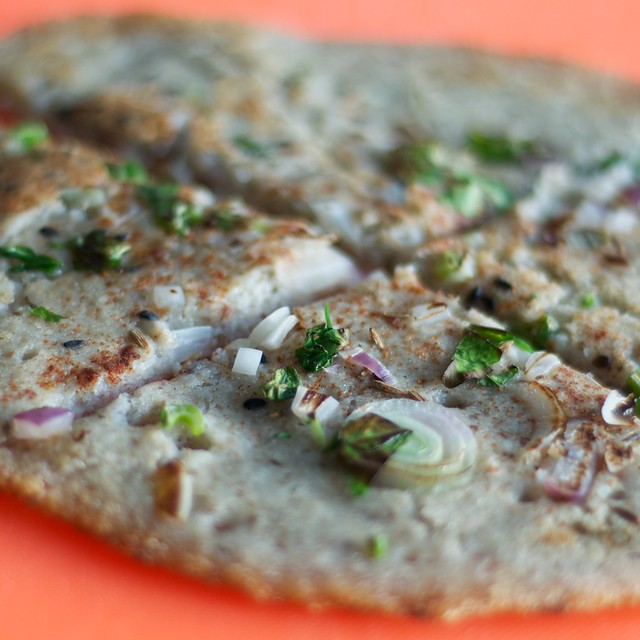
DSC_0418
Simple uttapam (salt, pepper, cumin seeds, cilantro, onion, paprika, sesame seeds)
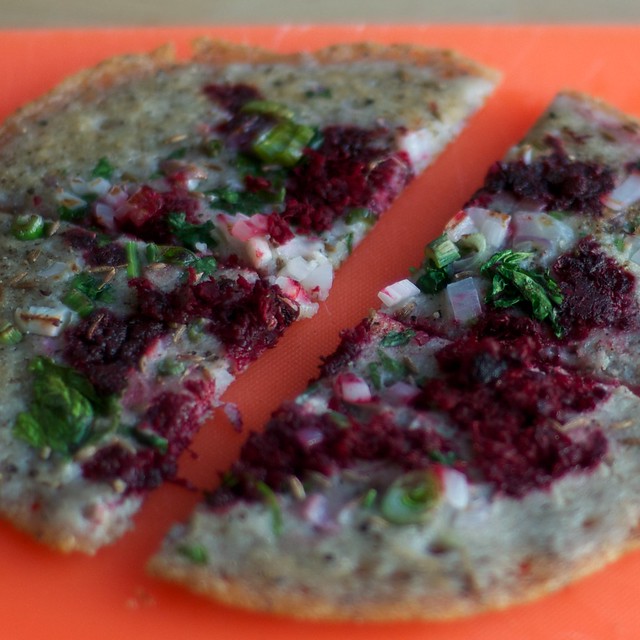
DSC_0435
More advanced uttapam (salt, pepper, cumin seeds, grated beets, chopped fennel)

With this recipe I must offer a disclaimer. Firstly, I am not South Indian.

Secondly, this recipe is not a hand me down from my mother, or her mother, or any long lost family relative from generations of genius cooks. This recipe is solely born out of my singular obsession with certain South Indian foods which happen to contain soaked rice and udad dhal.

Thirdly, I am an ABCD* that speaks fluent, funny sounding Gujarati. If you put a vegetarian south Indian dish in front of me, it will be devoured. Murukku have no chance of surviving. Your extra rasam will find it's way into my stomach. Any dosa batter you had on hand, will be carried out of your home. Idlis? Gone. *An ABCD is an American-born confused desi. Non-resident Indians (NRIs) that settled in the US, call first generation Indians ABCDs because of our broken sounding language skills and lack of proper desi identity. And the fact that I have lumped all the South Indian states into a single culinary tradition. 

My obsession has proven to be useful. For a few years, the only Indian dish I would prepare would be dosa and sambar. Sometimes I'd venture out and make idli's, or chole, but this dish was the only dish I'd prepare regularly. It's unfortunate, that I overlooked uttapam for so long because it contains the same traits that I love about dosa: the planning, the soaking, the grinding, the inevitable wait for the bubbly to occur. If dosa is a lean, crispy, fattening, thin rice crepe, then uttapam is the stocky, well-rounded, rice griddle pancake. But uttapam is so much better. You serve it like an upside down pancake, and while it cooks, you can add toppings to it, so it's kind of like a griddle-cake pizza.

Uttapam is made out of a base of white rice and udad dhal or split black gram. These two ingredients are added to a bowl, covered with water, and allowed to soak overnight. Once done soaking, they are blended together, allowed to rest in a warm spot overnight, and then given a few last minute additions before being the world's answer to the best damn savory pancakes.

So how can you make it? You need four main ingredients: long-grain white rice and brown rice, yellow split peas, and udad dhal. I know - this list seems long, however these ingredients are shelf-stable and don't require much storage room. And once you start preparing the batter weekly, you'll have all the ingredients in your larder. Of these essential ingredients, udad is key. It's sold as urad, udad or black Bengal gram, and is often sold in one of three ways: 1) whole and peeled so it looks white, 2) it is sold split with the black skins on, or 3) it is sold split with no skins. Any variety of these will work. I have tried them all. While not common in grocery stores or co-ops, urad dhal can be purchased online, or a south Asian grocery store.

Finally, I want to note here that I've experimented with different types of lentils so that you won't have to. I've experimented with different ratios of lentils to rice. Of the lentils, I've tried: yellow-split peas, red lentils, green split peas, regular grocery store lentils, and mung beans. I find that udad dhal works the best, and I like the body the yellow-split peas provides. Since I wanted to try healthier types of whole grain rice, I've also tried different ratios of: white and brown basmati rice and white jasmine rice, grocery store regular brown rice, grocery store regular long grain rice, parboiled long-grain rice, forbidden black rice, and red wehani rice. Of these rices, all of the long-grain varieties worked, but the forbidden black rice and the red rices were too starchy and caused the uttapam to stick when cooked. So far, I found half white rice and half brown rice to be a good cooked consistency.

Ready to get started?
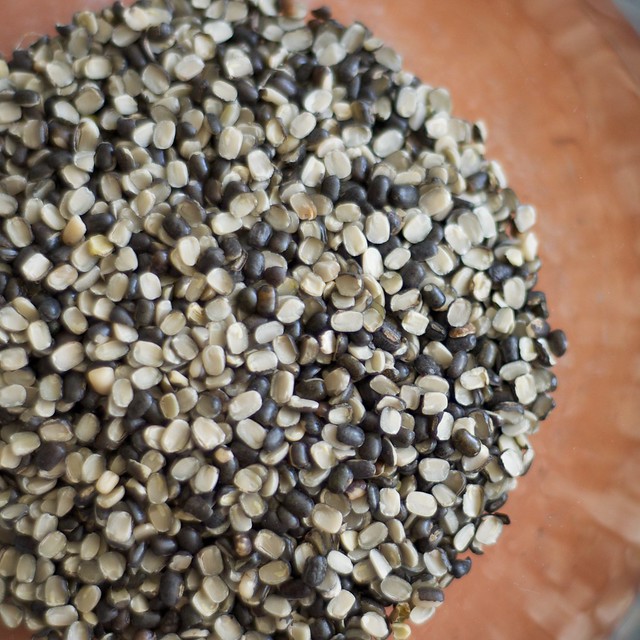
DSC_0010
For my uttapam, I add 1/2 cup (100 g) udad dhal to a large bowl.
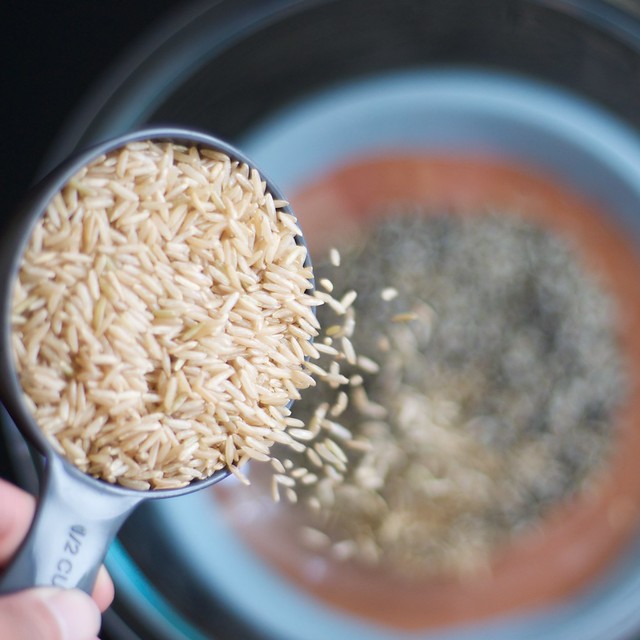
DSC_0043

DSC_0054
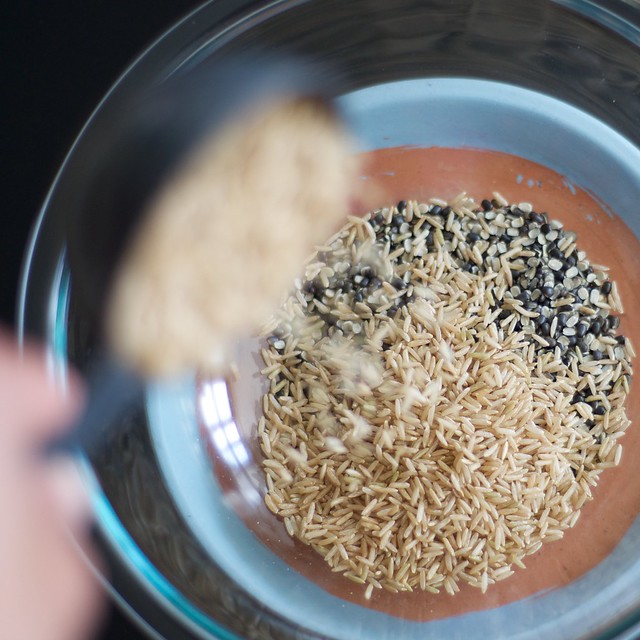
Then I add 1/2 cup (105 g) of long-grain organic brown rice (these pictures were fun to take).
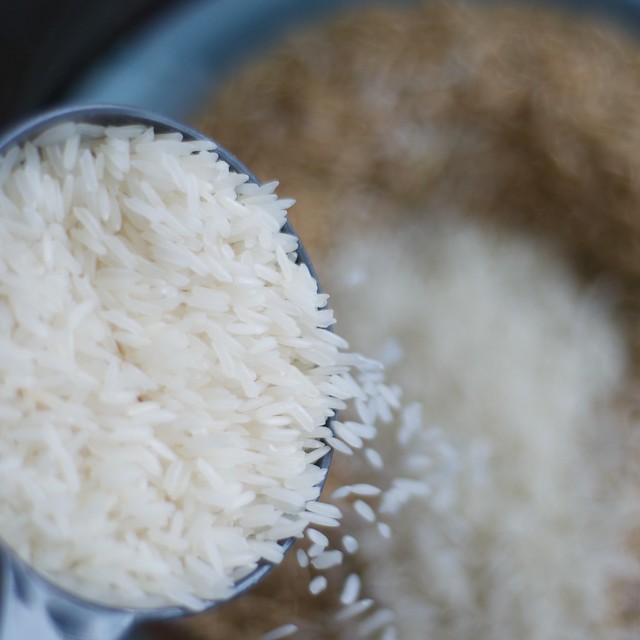
DSC_0066
Next, add 1/2 cup (120 g) of long-grain white rice.
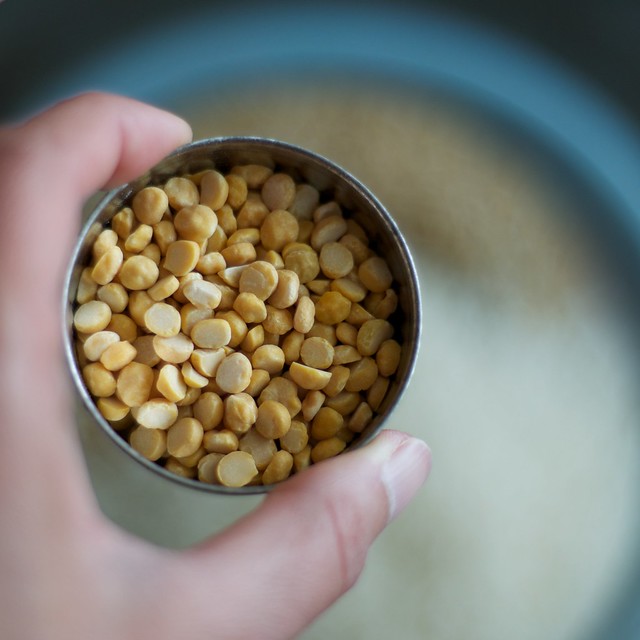
DSC_0085
Next, add 2 tbsp (25 g) of yellow split peas (or channa dhal) to the bowl.
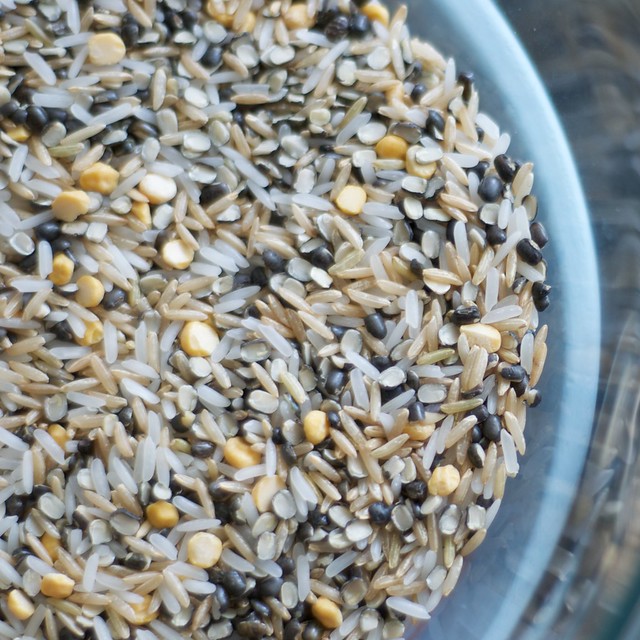
DSC_0100
Once these 4 ingredients have been added, stir the contents of the bowl. The next step is adding water and then letting the lentils and rice soak overnight.
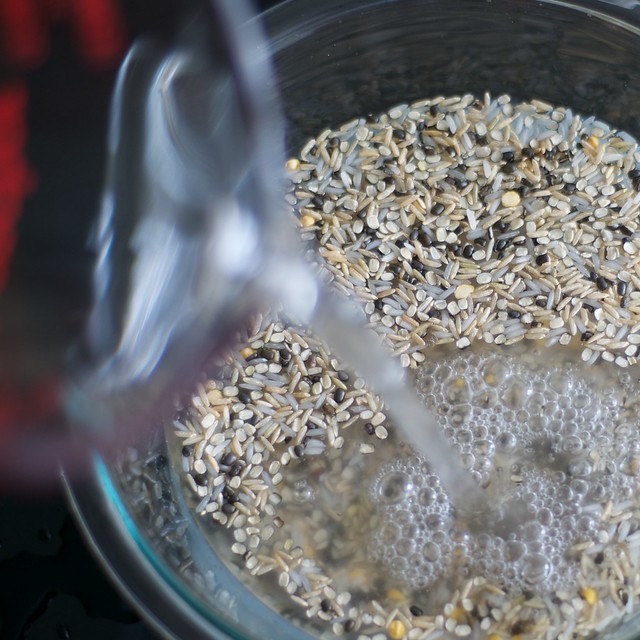
DSC_0122
Pour in about 2 cups of cold water and let it soak overnight. I like to place a plate on top and then place the bowl in the oven.
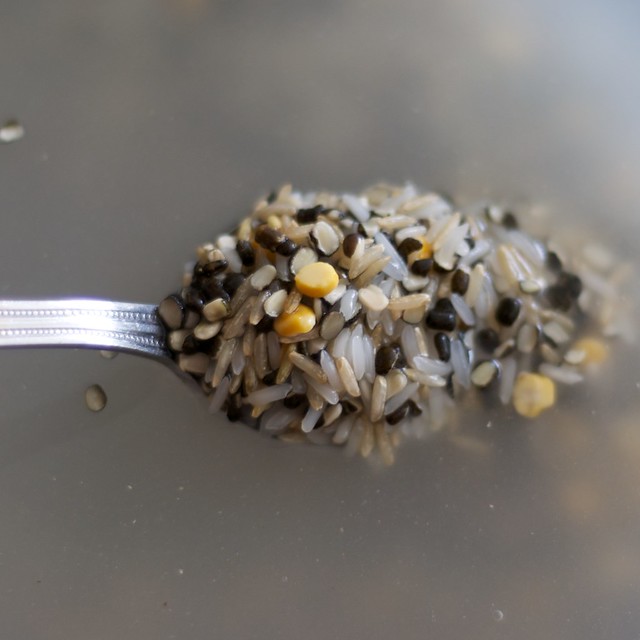
DSC_0136
The soaked lentils and rice should like this after pouring water into the bowl.

Then, the next day:
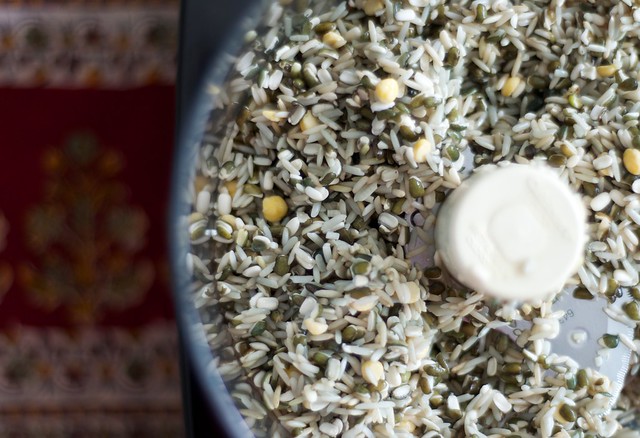
DSC_0234
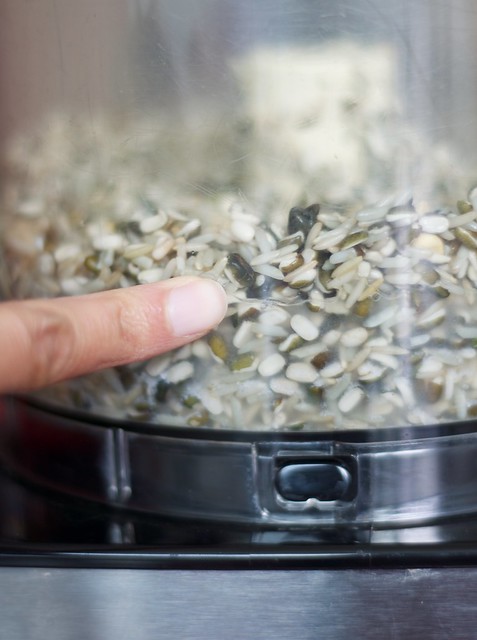
Drain off the water from the soaked lentils and rice, and add them to the food processor. Make sure the mixing blades are in the food processor. The udad dhal may look green. That's ok.
DSC_0246
Pour in about 1/2 cup to 1 cup of water. This is about how much water is needed. About 2 tablespoons of plain yogurt may be added at this step.
DSC_0252
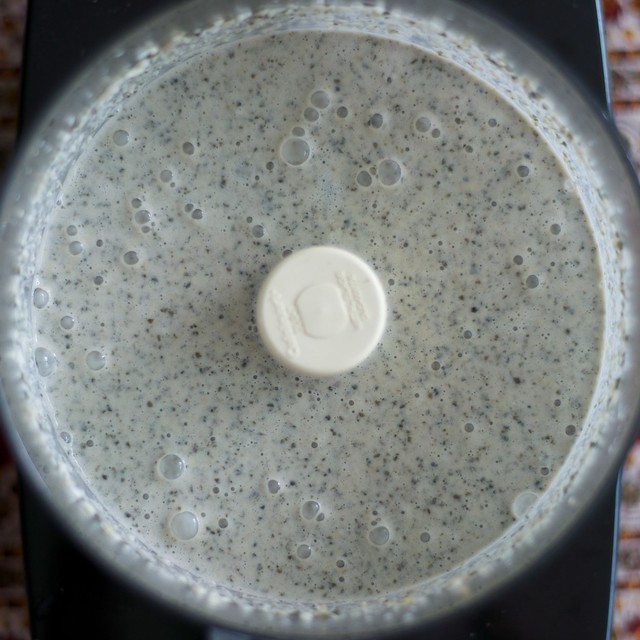
Blend for 1 minute. Scraping down the sides with a rubber spatula. Process for 15 second to 30 second intervals until the texture is uniform.
DSC_0302
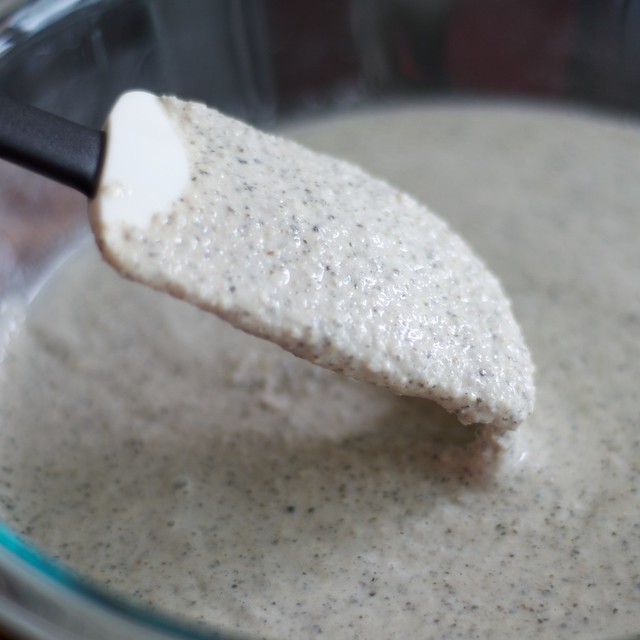
The uttapam batter is ready to rest. Now at this step, the uttapam batter should be covered with a plate or plastic wrap, and placed in a warm area to ripen. This can take a few hours to overnight, depending on how warm your kitchen remains. I like to place the bowl in the oven.

The recipe follows below. While this might not be an authentic recipe, it's easily replicable in any kitchen with a blender or food processor.

Neeli's inauthentic tasty Uttapam
Yield: 4 servings, such as 2 to 3, 6" uttapam per person. This recipe is best thought of as prepared in multi-day steps. Day 1: soak ingredients. Day 2: blend ingredients and allow them to rest. Day 3: Eat! Repeat! I recommend serving for lunch or breakfast. 

Special tools: a large mixing bowl, a food processor, patience and curiosity.

Day 1: Foundation for batter (these ingredients will be soaked together)
1/2 cup (100 g) udad dhal (please note that split black gram, whole black gram, peeled split black gram, or unpeeled split black gram will all work fine)
1/2 (120 g) long grain white rice (basmati, jasmine, or regular grocery store long-grain rice, I prefer organic)
1/2 cup (105 g) long grain brown rice (basmati, jasmine, or regular grocery store brown long-grain rice is fine, I prefer organic)
2 tbsp  (25 g) yellow split peas or channa dhal, mung beans can be OK too here, although sometimes they sprout if left to soak for too long.
2-4 cups water

Day 2: Blending time
the drained rice and lentils
2 to 3 cups of water, may reserve the soaking water, or can use fresh water.
2 T to 1/4 cup yogurt (can be omitted)

Directions for Day 1 and Day 2:
Step 1: I rinse the rice and the lentils. Purists will not rinse, but these are organic products from the earth, and I have made three batches where a stone, yes a stone, has been ground into the batter. Trust me, NO ONE wants to bite down on a stone, and tiny stones are not good for your blender or food processor blades. Rinse the lentils and rice well. After rinsing, add them to a large mixing bowl and cover with water. Cover the bowl and let the lentils and rice soak for 1 day, or overnight. For example, you may soak the lentils and rice overnight. Then, the following day the rice and lentils can be blended in the morning. Alternatively, you may soak these together before going to work in the morning, and when you get home you can blend the batter.

Step 2: Drain the water from the soaked lentils and rice. Inspect the rice and lentils carefully for any loose stones or rocks. Set aside about 2-3 cups of water. We will not use all the water.

Step 3: Place the drained and soaked rice and lentils into the work bowl of a food processor, or blender. Pour in 1/2 cup to 1 cup of water into the work bowl.  Process or blend together for about 1 minute. After 30 seconds, stop the blender or food processor and use a rubber spatula to scrape down the sides. Only add water if it's too dry. We want a batter with the consistency of pancake batter. Continue processing until all the lentils and rice are uniformly blended. We will not use all the soaked water.

Step 4: Now, a controversial step. I add about 1-2 tbsp of plain yogurt to my batter to kickstart the fermentation, and add a bit of sourness to my batter. Kataash perhaps (a slight tang or pleasant sourness). I add it towards the end of the blending time. For example, once my batter has reached the proper consistency, I pulse in some yogurt until well blended.

Step 5: Turn out the batter to a bowl and cover with plastic wrap or a towel. The batter can be allowed to rest on the counter or in the oven. After a day, place it in the fridge until ready to make. I find it helpful to place reminders on my cell phone to avoid forgetting about the batter.

Day 3: Cooking time
Yield: 4 servings, such as 2 to 3, 6" uttapam per person.
1 recipe of uttapam batter
1/4 cup semolina or sooji  (common ingredient in couscous, and processed into Cream of Wheat)
1/2 tsp salt to taste
1/8 tsp baking soda
Oil (peanut or olive is fine)

Toppings:
flaked sea salt and fresh black pepper
fresh cilantro, chopped
sliced jalapeno rings, remove seeds
cumin seeds, whole
paprika, ground
shredded carrots or beets
diced onions and bell peppers
cheese, cheddar or mont jack
Other nice toppings: chopped fennel, diced tomatoes, diced avocado

Cooking Directions:
Step 1: To the batter, add about 1/4 cup of semolina (sooji), salt to taste, and a thick pinch of baking soda. Stir to combine. The semolina is a non-stick trick.  If omitted, the first few uttapam will stick to the pan, but will eventually stop once enough oil is used. If omitting the semolina, be generous with the oil.

Step 2: Meanwhile, heat up a non-stick griddle, or a cast-iron over medium heat. Add some oil and once hot, pour in about 1/4 or 1/3 cup batter. I like to use a measuring cup or ladle. The batter will spread out, and you can help it.  Drizzle a little oil around the edges. Cook for 1-2 minutes over medium heat. Now, to the toppings.

Step 3: The uttapam can be topped with anything. I like these variations:

Simple: salt, pepper, cumin seeds, cilantro, onion, paprika.
Advanced option 1: salt, pepper, cumin seeds, grated beets, chopped fennel.
Advanced option 2: salt, pepper, cumin seeds, cilantro, paprika, diced fennel
American: salt, pepper, cumin seeds, cilantro, diced onions and bell peppers, cheese

4. Add the toppings of your choice, cook about 3-4 minutes longer, and if desired flip over to cook bottom. The flipping over step may be omitted. Serve immediately toppings side up, with some fresh tomatoes, cilantro chutney, and yogurt.

September 15, 2014

Lentil Veggie Burgers

Veggie burgers

Spicy lentil veggie burgers

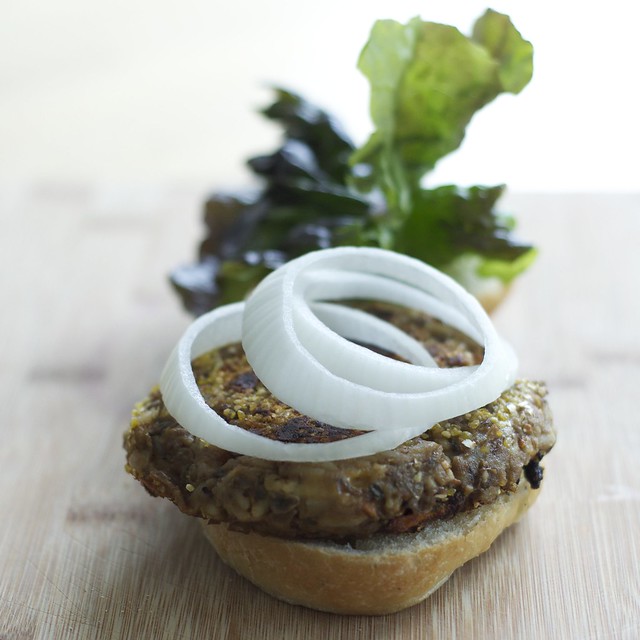
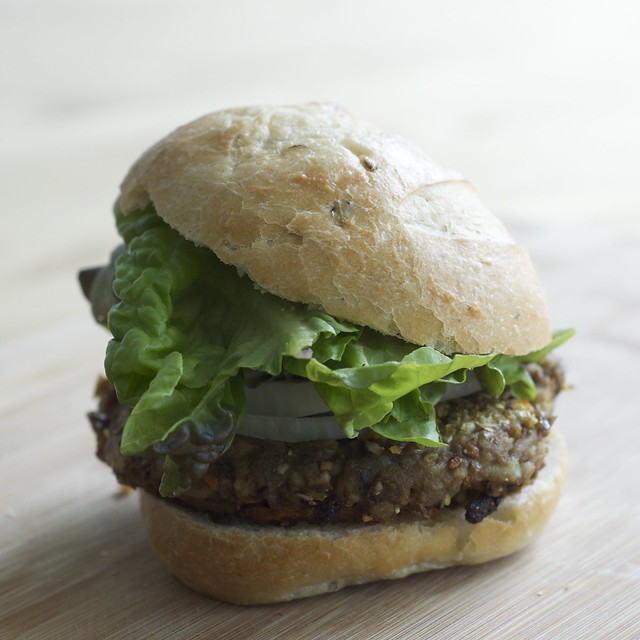
For these veggie burgers, any spice mix can be added to suit your own tastes. Although I include chopped pickled jalapeños in mine (this is my secret delicious ingredient), they can be easily omitted. This is a great base for adding your own spices to your own signature veggie burger. Because everyone should have a signature veggie burger. I happen to have like 10. No seriously, this one, this one, this one, this one and then another version of that one. See the one in this picture? This one. Ok, I promise, last one.

These can be grilled, pan-fried, or baked. I've provided all of the directions below.

Spicy Lentil Veggie Burgers
Yield: 10 patties, roughly 1/3-1/2 cup patties

Ingredients:
1 cup dried lentils, rinsed and drained (prepare from scratch, or sub in 2, 14 oz cans lentils, rinsed and drained)
3 cups water (omit if using canned lentils)
1 small shredded beet, or carrot
1/3 cup diced white onion
1/2 cup shredded cheese, such as smoked cheddar (optional, can be omitted)
1-2 tbsp chili powder (commercial or prepare your own, recipe below)
5 pickled jalapeño slices, finely minced
1/2 cup cooked rice, more or less is fine
1/2 cup oats, more as needed (either instant or 1-minute oats are fine)
1/4 cup corn meal, for dredging lightly

Spicy mix
1 tbsp chili powder (e.g. red chili, ancho chili, or chipotle chili)
2 tsp cumin
2 tsp oregano
1 tsp salt
1/2 tsp smoked paprika
1/4 tsp garlic powder

Special tools: a large mixing bowl, colander, pots and pans, a box grater, and a spice grinder if grinding your own dried chili peppers. I used a pressure cooker to prepare the lentils while I prepped the rest of the ingredients.

1. Rinse the lentils. If preparing the lentils from scratch, add 1 cup lentils and 3 cups water to the pressure cooker. The smaller fry pan is fine. Close the lid and bring the cooker to the first red ring (low pressure). Cook 14 minutes over low pressure, and use the natural release method once the time is up. Once cool, drain the lentils in a colander for several minutes. If preparing on the stove, add the lentils and water to a pot and cook over medium heat for 30-45 minutes until soft. Once cool, drain the lentils in a colander for several minutes. No need to rinse them if cooked from scratch. If using canned lentils, rinse and drain them in a colander.

2. Shred a small beet over a box grater and add it to a large mixing bowl. Add the onions, cheese, chopped jalapeños, and rice.  Stir to combine.

3. Add the lentils and spices. Stir, then add the oats and combine until the mixture is fairly dry. We don't want it to be too wet where everything falls apart, and we don't want it too dry where it gets crumbly (see note below). Use your hands and shape a few patties. If it's too wet, add some extra oats, and try again. You can also add an egg at this point, because that will act as a binder. I usually don't add eggs, I think the oats work just fine.
Note: I do not recommend using a food processor because the consistency between too dry and too wet happens quickly, and the resulting product could be a mushy mess. All you really need to do is stir together the ingredients.

4. Smooth down the lentil mixture with the back of a spoon so it is uniformly level, and cover the bowl with a plate. Let the lentil mixture rest for 30 minutes in the fridge. This helps the oats soften up and set. This means the veggie burgers are more likely to retain their shape when cooking.

5. Once ready, shape the patties with your hand, or a 1/3 or 1/2 cup dry mixing up measure. Dredge the formed patty lightly in the cornmeal. Place them on a clean plate or cutting board.

6. When you have six or eight patties, heat some olive oil in a wide skillet and heat up over medium heat. Once hot add in the patties, and cook 4-6 minutes per side (preferred method, but grilling is really super too!)

If baking: lay out the patties on a lightly greased sheet, and spray or brush the top sides of the patties. Bake at 350 for 10 minutes. Flip them, once golden, spray or brush tops with a bit of oil and bake another 10 minutes. Serve when golden.

If grilling: place all the formed patties on a plate and place in the fridge for an hour or overnight. They should be cold just up until they hit the hot grill. These can be cooked on medium heat on a gas grill, 5 minutes per side. Use a spatula and carefully lift them up before flipping to catch the whole burger. Use some tongs or another spatula to help them along. If overhandled they can fall apart. Make sure you lightly grease each side of the patty before putting it on the grill.

Serve alongside some toasted brioche buns, fresh lettuce, and onions rings. I like to roast fingerling potatoes too and serve them on the side. These store well in the fridge for up to 4 days. Don't leave them any longer.

July 11, 2014

Spaghetti with beluga lentils

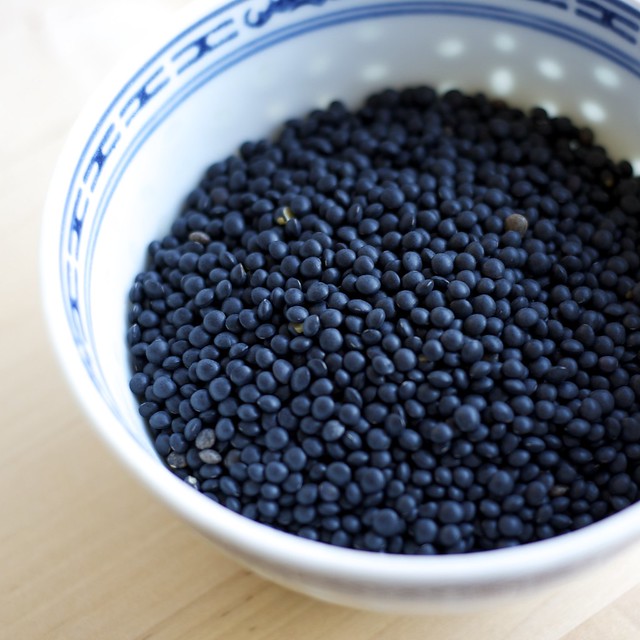
those are lentils

DSC_0914

pretty Beluga lentils

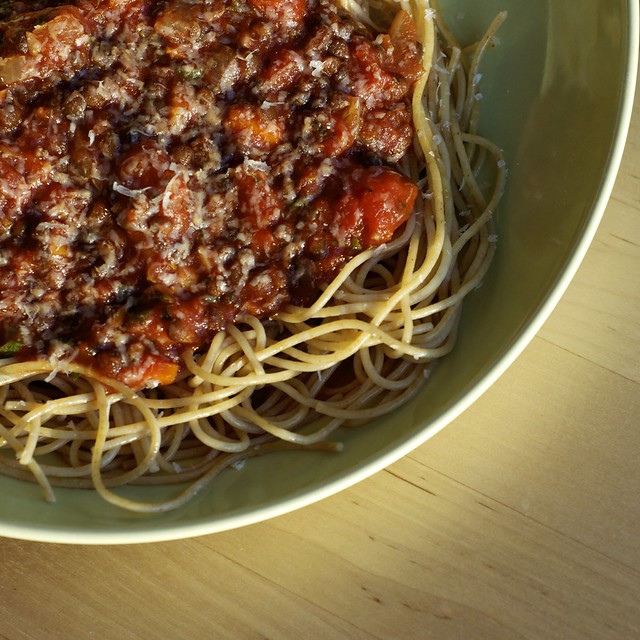
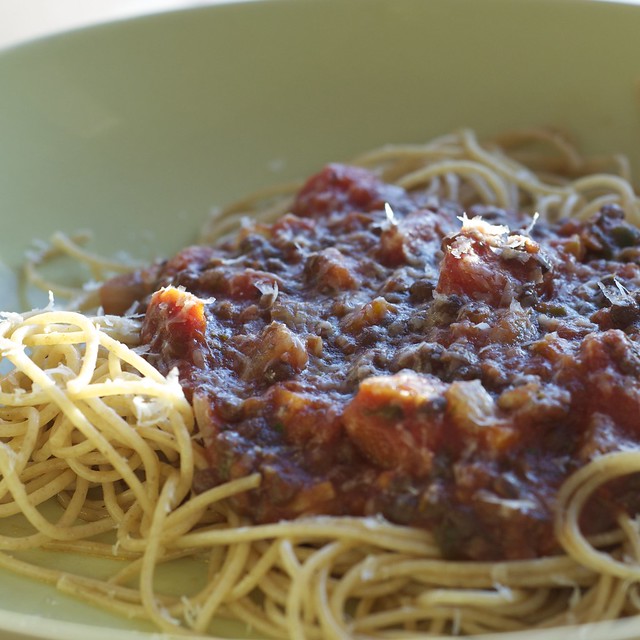
spaghetti with beluga marinara sauce

This is my version of a healthy marinara sauce with lentils. Lentils cook in no time in the pressure cooker. Surely by now, I've at least convinced you how awesome a pressure cooker is? I won't give up on you!

This recipe comes together quickly if you can think of it in 3 steps. Step 1, prepare the lentils in the pressure cooker. Step 2, prepare the marinara sauce, and Step 3, cook the spaghetti noodles. Most of the time, I start the pasta boiling water first, and then get to my tomato sauce, but you know your own ability to multitask.

This recipe is dedicated to my hubs. See hubs, now you know how I make it!

Spicy tomato sauce or marinara with beluga lentils
Yield: 4 servings, about 1 and 1/4 cup sauce per serving

Ingredients:
1/2 cup dried beluga lentils or regular green lentils
1 and 1/2 to 2 cups water
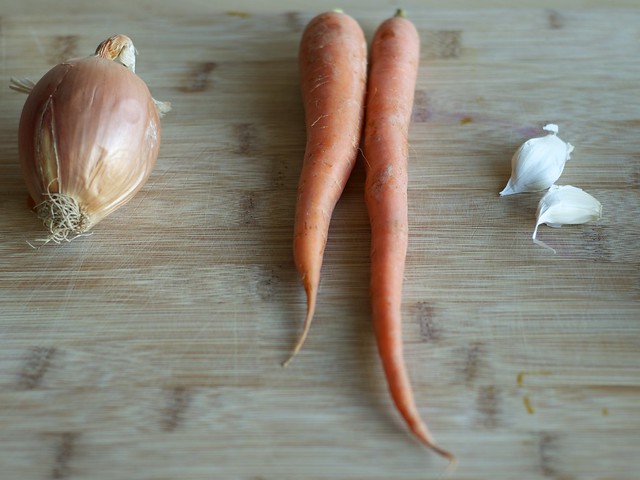
2 cloves garlic
a generous pour of olive oil
1 onion, finely diced
1 large carrot, or 2 medium carrots, peeled and quarter diced
1/4 to 1/3 cup of white wine, enough to barely cover bottom of pan (I think red would be fine too; honestly, I've used whatever is in the fridge or pantry) - use vegetable broth or water if avoiding wine.
2 T dried oregano
1 tsp dried thyme
2 T dried parsley 
1 tsp dried red chili flakes
1 and 1/4 tsp salt
1, 28 oz can San Marzano style tomatoes either whole or in chunks * see my note below
1/2 cup water
freshly grated parmesan
basil or parsley to garnish

To boil spaghetti
4 quarts water plus salt to boil
1/2 package or 1/2 lb whole wheat thin spaghetti

Special tools: None besides a good knife, and cutting board. Use the small pressure cooker fry pan for the lentils. For the marinara sauce and the spaghetti, have 2 pots ready. The first should be a large pot to cook pasta, the second should be a wide stir fry pan with a sturdy lid. If you don't have a pressure cooker, cook the lentils in a large pot.

*My cooking note: If using whole peeled canned tomatoes, blend half or 3/4 of the tomatoes in a blender and leave the rest sort of roughly chopped. It is OK with me if you want no chunks, just blend all of it. Do this before you get started. 

Directions:

See my note above indicated with * above.

Step 1: Add the lentils to the small pressure fry pan pressure cooker. Add the water, stir, and set the cooker over high heat on the stove (these are the first two ingredients on the ingredients list). Close the lid to the pressure cooker. Bring to the first red ring (low pressure) and cook 10 minutes on low pressure. Once time is up, remove the cooker from the heat, and set aside to cool down using the natural release method. 

Step 2: Prepare the pasta cooking water. Add the water and salt to a large pot. Depending on your stove, you can begin heating up the water for the pasta. 

Step 3: In a separate wide enough skillet with a lid, heat up a few generous glugs of olive oil over medium heat. Once hot add in the onions and stir, and then add in the garlic and carrots. Cook until the onions begin to just brown slightly. Pour in the wine, and cook until half of the wine is evaporated. 

Step 4: Add in the herbs and spices and stir together. Next, add in the tomato sauce, water, and salt. Turn the heat down to medium low heat,  and cover with a lid so that the sauce doesn't splatter on the cooking range. The water for the pasta should be close to boiling. If not, wait. The sauce will just continue to cook and thicken up a bit. 

Step 5: When the pasta water is ready and boiling, add the spaghetti, or other desired pasta, and cook until ready.  Next, drain the lentils from the pressure cooker, and then add them to the tomato sauce. Stir and taste the tomato sauce for herbs and salt. 

Step 6: When the pasta is done cooking, reserve 1 cup of the hot pasta cooking water and then drain off the pasta in a colander. Toss a little olive oil and a few splashes of the hot remaining pasta cooking water to keep the noodles separate. This is my favorite trick to serving pasta hot.

When ready to serve, add about 1 cup of cooked noodles to a plate and top with 1 and 1/4 cups of sauce. Pass fresh parmesan and chopped parsley at the table. 

May 28, 2014

Yellow split pea ginger scallion dumplings

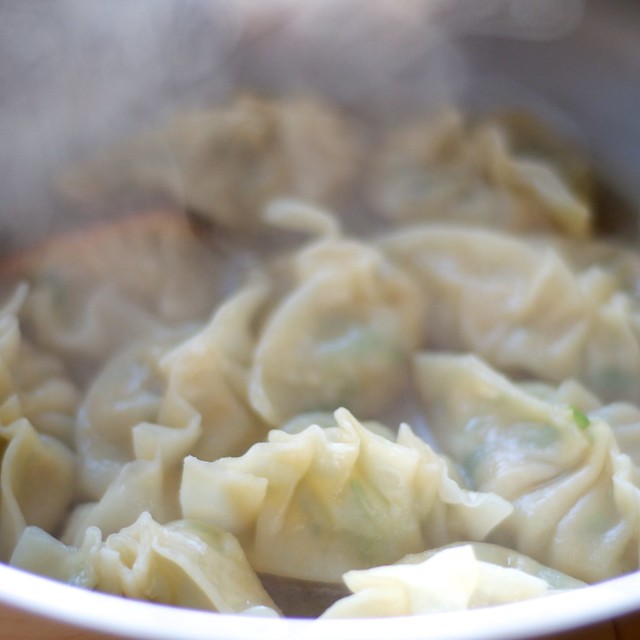
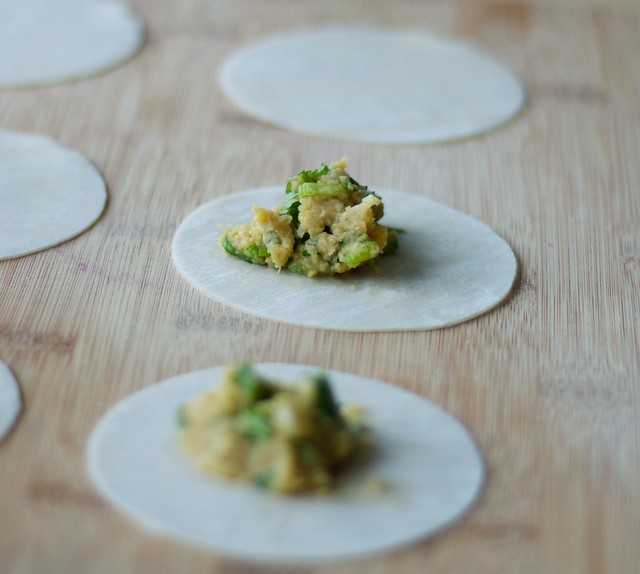
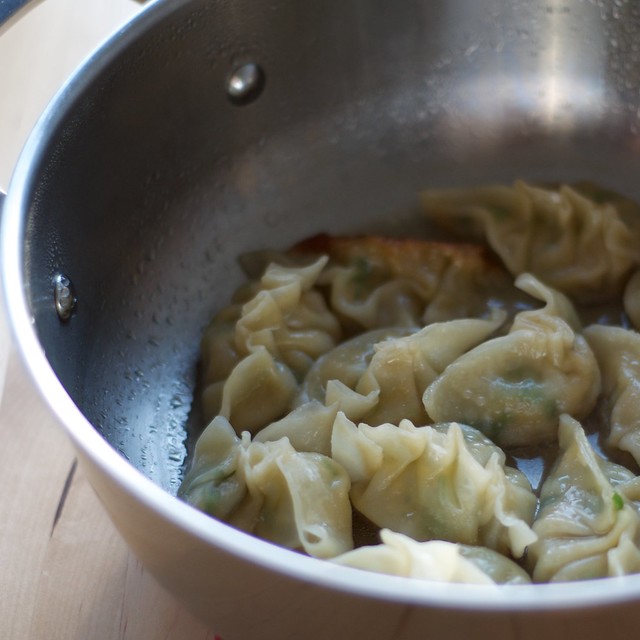
DSC_0669 DSC_0880 DSC_0862 DSC_0843 DSC_0677 DSC_0675 DSC_0875 These dumplings are pretty amazing. They are filled with a creamy gingery channa dhal, or yellow split pea, filling. They make a lot of work for a weeknight meal, but they are really fun to assemble and cook. The dumpling wrappers hold up really well, so if you are scared of tearing them or overhandling them, fear not. Since we are using lentils, we are definitely breaking out the pressure cooker (PC)! Now get excited and break out the PC!

Yellow split pea ginger scallion dumplings
The inspiration for these came from Heidi Swanson's 101Cookbooks' Golden Potstickers recipe
Yield: Approx. 50 dumplings, 1 and 1/2 tsp filling per dumpling; 5 servings, 10 dumplings each

Ingredients: 
1 cup dried yellow split peas or channa dhal
enough water to cook them in a PC
1 tsp ground cumin
1 tsp salt
1/4 tsp ground ginger
2" piece of fresh ginger, minced fine
1/2 cup chopped fresh cilantro
4 medium scallions or green onions
1 package gyoza or potsticker wrappers
water

Special tools: pressure cooker or large pot to cook lentils, a potato masher, cutting boards, a wide skillet with a lid, 2 jelly roll pans lightly dusted with flour.

Step 1. In the pressure cooker fry pan, combine the yellow split peas and enough water to cover the yellow split peas by about 3/4" of water. Stir to combine. Close the cooker and bring to low-pressure (first red ring). Once low pressure is reached, cook 11-13 minutes. Use the natural release method to release pressure.

If you don't have a pressure cooker, just cook the yellow split peas according to package directions, and let cool off enough before handling. This step can be done 1-2 days before prepping the dumplings to make the preparation faster.

Step 2. Open the PC fry pan and inspect the peas. They should be cooked but still retain most of their shape, and there should only be a small amount of water in the bottom of the pan after you lift away the first few layers of peas. If there is water up and over the peas, the water should be drained off. Return the peas to the PC fry pan, and mash the yellow split peas with a potato masher. This step can also be done in a food processor, but it is easy enough to do in the fry pan.

Step 3. Add the cumin, salt, and ground ginger to the pan and stir to combine.

Step 4. Add the cilantro, green onions, and minced fresh ginger to the pan and stir to combine. Once well combined, taste the mixture for salt. Since these will be served with a salty dipping sauce, don't worry if they taste undersalted.

Step 5. Clear some space on the counter and wipe away any crumbs. Once the counter is dry, dust lightly with flour and lay out 6 gyoza wrappers on the floured surface. Place a small work bowl filled with water nearby.

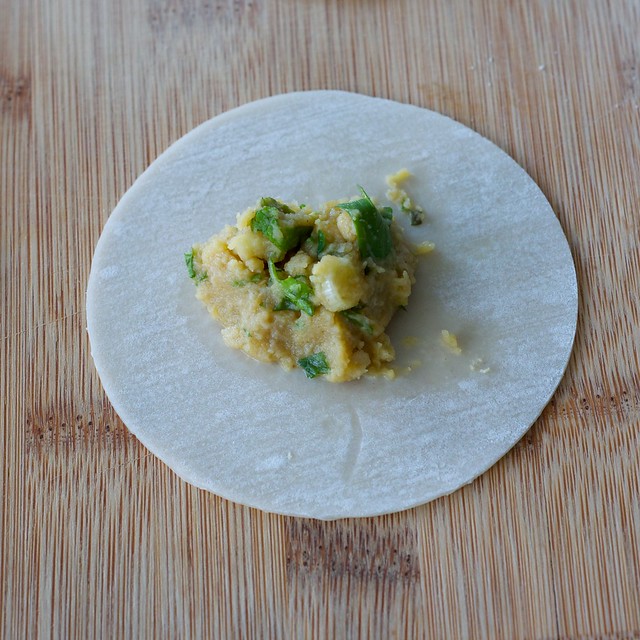
Step 6. Spoon 1 and 1/2 teaspoons of filling just slightly off the center of the middle of the gyoza wrapper. You can do this step to all of the wrappers at once.

Step 7. Now, working one a time, moisten half the circle and fold it over to make a half moon. The gyoza will want to stick. Once it comes together form small pleats where the ends meet, and push the dumpling down just slightly to give it a thick base for which it will be pan fried. Once the dumpling is assembled, place it on the floured pan until ready to cook.

Step 8. In a wide and deep skillet (if you can use one with a lid), heat up some neutral oil like peanut or canola over medium-low heat. Once the pan is hot, add the dumplings in a single layer letting their chunky bottoms line the pan. Don't overcrowd the pan. Let them sit for a about 5-6 minutes inspecting the sides right where they meet the base. The dumplings should not stick. With a small spatula or chopstick, lightly lift them up. The base should be golden and enticing. If they are not let them cook 1 minute or longer.

Step 9. Once they are golden, add 1/4 to 1/3 cup of water to the pan, and immediately close the pan letting them steam for 3-4 minutes. Serve them with some dipping sauce (see below). I guarantee they will be devoured.

These may be frozen and reheated. If freezing, place the prepped, but uncooked, dumplings in a single layer in the freezer. For example, place the dumplings in a single layer on a jelly roll pan and freeze until frozen through. Remove the frozen dumplings from the pan into a zip top ziplock bag. Date and label them.

If preparing frozen dumplings, these may be cooked just like in Step 8 and 9.

Soy-sesame dipping sauce
Yield: enough for 4 persons

This can be assembled minutes before serving. The sambal oelek is optional, and is not very spicy.

Ingredients:
3 tbsp soy sauce
1 tbsp rice wine vinegar
splash toasted sesame oil
scallions and sesame seeds
1/2 tsp sambal oelek (optional)

Directions:
Combine all of the ingredients together. Serve along with the dumplings or potstickers. Yum! Yum!

December 30, 2011

Red lentil dhal served over rice


As the holidays wind down it’s nice to have a hearty and healthy meal after days of gorging and drinking. I recently bought some Delhaize brand curry powder (no salt added) and found it fresh and delicious. I added it to these lentils along with some vegetable broth and this is the curried outcome.

This holiday we traveled by train to visit family. It was a nice relaxing way to get from one place to another. Earlier, Belgian rail strikes scared us into thinking that we’d have no trains for travel. After the strikes settled down tickets were purchased and rail travel resumed as normal. While I think car and air travel have their obvious advantages (e.g speed, setting your own schedule, convenience), it was especially wonderful to walk to the train station, sit down, read, and let the trains take us.

Happy Holidays!

Red lentil dhal served over rice
Serves: 4

Ingredients:
1 cup uncooked rice, prepared according to package directions
1 tsp olive oil
¼ tsp mustard seeds
¼ tsp cumin seeds
asafoetida (pinch)
few pods whole cardamom
1 cup onion, chopped
1 tbsp ginger, grated over a small hand grater
½ tsp cinnamon
red chili powder to taste; I used ¼ tsp
½ tsp garam masala
2 tsps curry powder
1 cup red lentils (masoor dhal), washed and drained
2 cups vegetable broth or water, plus 1 cup water extra

Directions:
  1. As always, hard to find spices can be omitted - any store bought curry powder will do. Begin cooking rice. Put 1 cup long-grain rice in a pot and fill with 2 and ¾ cups water (or according to package directions).
  2. Heat up about 1-2 teaspoons of olive oil in a medium size pot over medium-high heat. Add in mustard and cumin seeds. Once the mustard seeds begin to pop, add asafoetida and cardamom pods. Add onions and stir-fry lightly. Stir in ginger, cinnamon, red chili powder, and garam masala.
  3. Stir these until fragrant. Add in red lentils along with 2 cups vegetable broth or water. Stir and bring to a simmer. Stir this frequently. When the lentils have been cooking for at least 10 minutes, stir in curry powder and adjust for salt.
  4. Turn the heat to low and add in 1 cup of water. Simmer on low heat, partially covered, until the desired thickness is reached. Serve over rice. This last step should take about 20 minutes.

November 22, 2011

Yellow split pea and calabash squash curry

Yellow split peas
Split yellow peas.

Calabash squash
Calabash squash, a type of young bottle gourd.

Sauteing onions
Onions, ginger, and garlic sauteing along with fenugreek, udad dhal, and mustard seeds. 

Chopped and peeled calabash squash
Prepping the calabash squash.

DSCN0002
A thicker consistency before adding the split yellow peas.

DSCN0004
Thin the dish with enough water to let everything fill out.

DSCN0006
Squash chunks get added.

Yellow split pea and calabash squash curry

June 14, 2012 update: Laura, of the ever-spectacular Hip Pressure Cooking, was kind enough to share my (mom's) recipe in her Reader Recipes. I've been a fan of pressure cooking for a long time, and her cooker reviews and lessons can be transformational to anyone that cooks. Her approach is to bring this method of cooking to about any cuisine, and after scanning her pics, she pretty much nails them. My personal favorites (those I have bookmarked until I get my own pressure cooker) of Laura's are: tamales, eggs, crema Catalana, and artichokes.

If you're new to pressure cooking, but are intrigued and curious, check out the July 2012 Pressure Cooker Challenge. Join a community of support, build up skills, and share your recipes and techniques.

Mom's dudhi channa shak or yellow split pea and squash curry. One of a dozen recipes I have carefully gleaned on my trip home. 

In getting the Gujarati term for this squash/gourd correct, I did a few web searches, and asked each parent to spell it before settling on a spelling. Dudhi. Doothi. Doodhi. In Hindi, lauki.  Calabash squash is a type of bottle gourd which is used when it's young and green. If you can find it (usually at an Asian or south Asian market) peel the skin off and remove the seeds. It's mild, and it holds its shape well in curries or soups which are simmered. However, don't let it scare you off - yellow summer squash or zucchini squash can be used instead of the calabash squash.

Although the recipe ingredient list looks long you can omit many of the spices you don't have, or add spices such as increasing the heat with extra jalapenos or red chili powder. First read the recipe all the way through. Soak the lentils first, then prep the ingredients. This soaking time will help reduce the total cooking time of the lentils. This dish can be cooked in a pressure cooker which can cut cooking time in half, or can be cooked in a pot on the stove. A pressure cooker is high on my wish list of solid kitchen tools. 

The cooking times and directions have been written for stove-top and pressure cooker cooking methods. Serve the finished dish alongside some buttered hot pita bread, or over rice. Since it's close to Thanksgiving, it would make an excellent vegetarian/vegan main course, or perhaps even a one-pot meal for the weekend. With days of steady rain projected for the Pacific Northwest weather, this dish really hits the spot. 

Yellow split pea and calabash squash curry
(Dudhi channa ni shak)
Yield: 4 servings

Ingredients:
1 cup yellow split peas; soaked in water in a bowl, set aside.
1 tbsp peanut oil
1/4 tsp udad dhal, optional
1/4 tsp fenugreek seeds, optional
1/2 tsp mustard seeds, optional
pinch asafoetida, or hing, optional
1 clove garlic, chopped
1 tbsp ginger, chopped fine
1/2 cup onion, chopped fine
water as needed
2 cups calabash squash, peeled and cut into 1" chunks. Remove the seeds (ok to substitute unpeeled yellow summer squash or zucchini squash)
1/3 cup tomato chunks, thinned with about 2 tbsp of water
1/2 tsp turmeric
1 tsp salt
1 tsp cumin, ground
1 tsp coriander, ground
1/2 cup chopped cilantro, divided, safe half for garnish
1-2 tsps garam masala, to add just before serving
red chili flakes to be passed when served

Directions for stove-top method:
Approx. cooking time: 40 minutes
1. Wash the yellow split peas well. Place them in a medium size bowl and cover them with water.
2. Add the oil to a medium-sized pot, and heat up over medium-high heat. Once the oil is hot, add in the udad dhal, fenugreek and mustard seeds. When the mustard seeds begin to pop (about 1 minute) add in the asafoetida powder. Stir everything together and then add the onions, garlic, and ginger. Continue to saute, turning the heat down to medium. If omitting the optional ingredients, add the onions, garlic, and ginger to the oil and saute until golden. 
3. Add the yellow split peas (along with the water they are soaking in) to the pot along with 1-2 cups of water. Add the tomato chunks thinned with a bit of water, turmeric, salt, cumin and coriander. 
4. Add the calabash squash chunks (see note below about subbing squashes), and half of the chopped cilantro. Stir everything together and bring to a simmer over medium heat. Let cook 30-35 minutes. Stir it often, and check to see how the lentils and squash are cooking. The dish is done when the lentils are cooked, the squash is easily pierced with a fork, and the dish can be served over rice without being too soupy.  
5. Stir in garam masala and the chopped cilantro and serve. 
(Note: if subbing in summer squash or zucchini, let the lentils cook for 30-35 minutes before adding the squash in. The curry can be cooked an additional 10 minutes. This will prevent the squash from over cooking and falling apart. 


Directions for a pressure cooker:
Approx. cooking time: 25 minutes
Follow steps 1-4 in the directions above, but only add 1 cup of water. Because the pressure cooker cooks everything super fast the extra water is not necessary to accommodate the water that boils off on the stove top. Once you bring the curry to a nice simmer as in step 4, set the pressure cooker to 3 whistles on medium-high heat. 

If using summer squash or yellow squash, increase the soaking time of the lentils to 1 hour, and cook the mixture to a max of 2 whistles. It may take some adjustment, but it will prevent the squash from turning into a soggy mess, and should cook the lentils. Finish the dish by stirring in garam masala and chopped cilantro. 

October 24, 2011

Ubiquitous Lentils

Lentils
Ubiquitous spicy lentils

I make this dish when I remember to cook lentils, because the recipe makes a lot of lentils, and the dish can go in everything. These ubiquitous lentils were used to top a salad, as a side dish to enchiladas, they were stuffed inside calzones, and were consumed after Friday happy hour. I've been cooking up plain lentils and beans lately to have on hand to add to many other dishes. Pre-cooked plain beans and lentils can be added to soups, pastas, salads, top pizzas, thrown into burritos or quesadillas, or put on toast. Canned varieties are a fine substitute, but home-cooking them is easier and cheaper. I must have been thinking about Herbivoracious's Mexican cowboy beans when I made this, so I'm dedicating these lentils to that delicious blog.

I just got done reading Mark Bittman's essay Cooking Solves Everything: How Time in the Kitchen Can Save Your Health, Your Budget, and Even the Planet. If your familiar with Bittman, you'll know he writes about food and cooking with a real food real ingredients mentality. As a cook, it was inspirational and reminded me how important it is to share cooking, in whatever fashion, with others because home-cooked meals made from largely unprocessed foods are rare. If you cook simple healthy foods on a daily basis you have the ability to impact behaviors of others around you because cooking and feeding people involves people to react to what you are putting in front of them whether it tastes good or bad.

Cooking and sharing meals changes the perceptions of the how and what of cooking meals. Cooking impacts health because by cooking on a daily basis you have the ability to cook healthy foods and serve yourself normal portions of food, and avoid prepared foods that derive the majority of their flavor from salt (either as sodium or MSG), fat, sugar, and other flavor enhancers. These foods, the bulk of which are highly processed, or restaurant and fast foods, are bad for health. Bad. Bad. Bad.

Cooking, while not as obvious as it seems, supports local food economies. Bittman argues that cooks, that cook a lot get selective about ingredients, and are tuned into the cost of the food they are buying; they purchase seasonally, not because they are dedicated locavores, or trendy foodies, but because cooks purchase and select the foods they cook with. Most grocery stores, while they stock huge varieties of fresh fruits and vegetables, run the best deals on seasonal produce. The best part about this, is that it's usually right in front of you as you go into any grocery store.

I have been following the Food Day events that have been going around nationally. My friend, Alyse, helped organize the NC Food Day where they organized over 1060 lbs of fresh fruits and veg for needy families. The Food Day campaign aims to raise awareness and action on local foods policies to support local food economies, promote sustainable agriculture, protect the environment by exposing big agribusiness marketing and manufacturing, and improve nutrition and chronic disease knowledge. It fits closely with the Bittman's essay because cooking is a one-step action to supporting better health and stronger food economies.

Ubiquitous Lentils

Ingredients:
olive or peanut oil for sauteing
1 onion, chopped
2-3 cloves garlic, minced
a tad bit of beer to reduce (optional)
2 tomatoes, chopped, or diced plain canned tomatoes
salt to taste
1 chipotle pepper, chopped
1 tsp herbs (optional, such as oregano or thyme)
1 tbsp cumin
2-3 cups cooked lentils, more or less, or 2 cans of lentils, rinsed and drained.
water to bring everything together, or broth
Fresh squeeze of lime

Directions:
1. In a wide and deep saute pan, cook onions and garlic together in olive oil over medium-high heat. After they start looking golden, reduce them a bit with a splash or two of beer. You can use any variety you like. You don't have beer? No worries, just skip. Cooking and quaffing a beer are side by side activities in my book. I tend to drink a lot of Belgian strong golden ales (such as Duvel), so I used a few splashes just to see what it would taste like, it was good.
2. It will sound fancy and smell good. Stir in the tomatoes, salt, chopped chipotle peppers, herbs and cumin. Stir it all around, and then add the cooked lentils.
3. Add in the broth or water and cook until combined and reduced down a bit. Should take about 20 minutes, or less. Squeeze with lime and serve. Can store up to a week in the fridge.  

August 29, 2011

Ethiopian-style red lentils


Ethiopian-style red lentils

spices

Masala mix

These red lentils are adapted and modified from a Saveur recipe. While the preparation was simple, the homemade spice mix the Saveur recipe called for had some hard-to-find ingredients, and called (optionally) for spice-infused clarified butter. The spice mix, with ingredients that you can find, is easy to make with a spice grinder, or mortar and pestle. I absolutely love the home-made masala (masala = blend of spices) mix used in these red lentils - whether they are authentically Ethiopian is hard to tell. I think they certainly tasted more Indian (perhaps because my pantry is stocked with Indian spices?). The lentils took their sweet time cooking on the stove top, which as the aromas of this dish waft around the house, you'll stomach will grumble in eager anticipation. If you have left overs they will be spicier the next day.

Clarified butter, also known as ghee, is made by heating up regular butter over a low-medium heat, and then skimming off the milk solids which collect at the top. This leaves a clear golden liquid, that can be heated to a higher temperature, or has a higher smoke point (the smoke point is the physical temperature that hot cooked fat reaches before it starts smoking). I substituted regular butter, as butter always tastes delicious, and added in a few of the spices to the red lentils.

Here's my take, this serves 4; can be served over rice, or with dosa to mimic injera, or pita or naan bread. The red lentils are called masoor dhal or red lentils. While lentils don't need any soaking, I soak the lentils while I'm prepping the rest of the ingredients to soften them up. The butter in this imparts a lovely flavor, but can be omitted (such as using cooking spray) or replaced with oil, 1 tbsp is fine. Use as many of the spices you can find, and if you can't find them, just leave them out. Garnish with some fresh chopped onions and a squeeze of lemon. 

Ethiopian-style red lentils
Serves: 4
Ingredients, listed in order of use:

1 cup of long grain rice, cooked according to package directions (optional)
1 cup of red lentils or masoor dhal
2 tbsp butter, divided; stir in remaining 1 tbsp just before serving
1 onion, chopped fine
3-4 whole cardamom pods (optional)
3 cloves garlic, chopped
1/2 of a red bell pepper, chopped fine
2 and 1/2 tbsp home-made masala mix, recipe below
1 tomato, chopped
salt to taste
3 and 1/2 cups water
1/4 tsp fenugreek powder (optional)

Directions:
  1. If serving with rice, cook and prepare according to package directions.
  2. Next, rinse the red lentils under water. Put it in a large bowl and cover with water. Let it soak while you prepare the rest of the ingredients.
  3. Heat up a large soup pot over medium-high heat. Add 1 tbsp butter, or oil if using, and once the butter is melted and slightly foamy, turn the heat down to medium and add in the onions. Saute until golden, 7 minutes. Add in the whole cardamom pods.
  4. Add in garlic and red bell pepper. Stir to combine. Cook 5 minutes.
  5. Add in 1 tbsp of the masala powder. Stir to combine.
  6. Add in chopped tomatoes along with their juices. 
  7. Rinse the soaking lentils and drain off the soaking water. Add the lentils to the pot along with 3 and 1/2 cups of fresh water.
  8. Stir in 1/2 tsp of salt. Bring the heat up to medium-high and cook for 40-45 minutes, stirring often. Half-way through cooking add in the rest of the 1 and 1/2 tbsp masala powder. 
  9. Just before serving, stir in 1 tbsp of butter, the fenugreek powder if using, adjust for salt, and serve immediately.
Masala Mix (adapted from Saveur)
A small coffee grinder works efficiently to make ground spices. With some patience, a mortar and pestle can work just as well. Adding the toasted seeds and spices 1 tbsp at a time, begin making swift strokes to pound the spices. This will help break up the seeds and crush the larger parts. Then in a circular motion, crush the spices until a powder forms. Repeat the process to get a finer powder. Remove each batch to a bowl. A small non-slip corkboard can be placed under the mortar to protect the countertop. Pre-ground spices can be added last.

Ingredients, listed in order of use:
2 tsp whole coriander seeds
1 tsp fenugreek seeds
1/2 tsp fresh ground pepper
1/2 tsp nutmeg, ground
6 whole cardamom pods
1/2 tsp red chili powder
1/4 tsp red chili flakes
1 tbsp paprika
2 tbsp smoked paprika
2 tsp salt
1/2 tsp cinnamon

Directions:
  1. Toast the coriander, cardamom pods, and fenugreek seeds together in a small sauce pan (low heat so they don't burn). Stir them around the pan often.
  2. Once they are toasted and golden, about 5 minutes, transfer the spices to a spice grinder, or add in batches to a mortar and pestle.
  3. Place the crushed powder in a small bowl. Add in pepper, nutmeg, red chili powder, red chili flakes, both types of paprika, salt and cinnamon to the bowl.

October 7, 2010

Cabbage Lentil Soup and Truffled Parmesan Polenta


I picked up some quick-cooking polenta recently, and am happy to present this recipe. I would recommend slowly whisking in the polenta to the boiling water, and then keeping the add-in ingredients very close by. I was running around the kitchen looking for a lid, while polenta was bubbling like volcanic ash onto my arms, and onto the floor.  You can serve the polenta right away, or you can let it cool into a mold (such as a shallow narrow pan like a small bread loaf pan, or a bowl) to slice later. Allow an hour more if you mold the polenta. Otherwise this can come together in 40 minutes.

Back in Chapel Hill my friend Melissa made a truffle-mushroom-polenta dish. I think she was trying to pan-fry the polenta but it just melted into the oil, and so she just stirred in her truffled mushrooms.  Then as if that couldn’t get any better, she served it up with some bourbon bread pudding. Melissa, one day, I want both of these recipes, and to finally have my very own bottle of Bulleit Bourbon.  

This came together pretty quickly between 30-45 minutes. If you want fancy polenta slices, allow up to an hour, but most of it is idle time, or could be prepared in advance.

Cabbage Lentil Soup
1 tbsp and 1 tsp butter or oil
3 cloves garlic, minced fine
1 cup red onion, chopped (about 2 small red onions)
1 medium carrot, chopped
2-3 tbsp tomato paste plus 2 tbsp water
3/4 cup French green dried lentils
1 vegetarian bouillon cube
1-2 liters water
1 tsp cumin
1/4 tsp red chili powder
1/2 tsp dried garlic powder
1 tsp dried onion flakes
1 tsp oregano
4-5 cups cabbage, cut into wide ribbons.
2 tomatoes, chopped
1/2 tsp salt
4 tbsp parsley chopped, for garnish (set aside 2 tbsp for the polenta)

Directions:
1. Heat up the butter over medium-high heat in a large soup stockpot.
2. Add in the minced garlic and after 1 minute, add in onions and carrots. Stir for 3 minutes.
3. Stir in tomato paste, and 2 tbsp water, stir to combine.
4. Add in water, lentils, bouillon cubes and the cumin, red chili powder, onion flakes, dried garlic powder, and oregano. Stir to combine. Add in more water if the level looks low. You want enough water so it looks like a soupy and so the lentils can cook. Cook partially covered for 20 minutes. Stir the soup often.

5. Stir in the cabbage and salt and continue cooking for 10 minutes.
6. Garnish the soup with parsley and serve alongside the polenta.

Truffled-Parmesan Polenta:
5 cups water
1 cup ready-cook polenta
1/3 cup parmesan-reggiano, shredded
2 tbsp truffle oil
2 tbsp parsley, chopped

salt to taste cooking spray if using a mold

Directions:
1. Bring 5 cups of water to boil in a medium saucepan and set aside 1 cup of ready-cook polenta.
2. If you have pot holders, put them on for this next step, and turn down the heat to medium-high. For 2 minutes, whisk in the polenta quickly making sure to get rid of any lumps. Quickly, add in parmesan, truffle oil and parsley.  As the polenta thickens the boiling turns into spurts, and you can get burned.  It’s worth it, the polenta is very good. Turn the heat off and continue to stir another 2 minutes.
3. Serve immediately, or follow directions below to make a mold so you can slice the polenta.

Polenta slices:
Put the cooked polenta into an oiled medium mixing bowl, or an oiled medium bread loaf pan.  Set in the fridge (1 hour) or freezer (30 minutes) for rapid cooling.  It can take up to an hour.  
Once cool, slide the polenta onto a cutting board and cut into desired thickness. You can place the polenta in a grill pan (the non-stick ones) used for making grill marks, or put it into a regular skillet and brown with some cooking spray - or you could use a baking sheet and place lightly brushed polenta slices on top and broil on high for a minute or two.

September 8, 2010

Week of Meals

I started off last week with food on the mind.  On Sunday, I put together a week of meals (five meals). 
It didn't take too much time, maybe an hour or so, and I was able to reward myself for the effort with a nice home brew. I tend to get sick of planning, but I was motivated this week, and so I'd like to share. First here's the list of meals, and I'll post recipes below. 

Day 1: Mixed beans with tomato bruschetta
Day 2: Spaghetti with zucchini and basil
Day 3: Taco salad
Day 4: Mushroom and wild rice soup with peach-bibb lettuce salad
Day 5: Quinoa stuffed tomatoes with Cajun oven potatoes

On Sunday evening, Allison and Nico, came over for some dinner. We had gone on a bike ride to Mechelen along the canal or Vaartkom just north of the city. It was warm and sunny and was a break from how cold it has been in August.  During dinner, Nico and Allison talked about their 25 favorite meals. It was pretty hilarious because I think they have a shared Google Doc to plan meals. Nico is a fabulous cook (see here).  I loved their idea of a fondue-TV-movie dinner night and was inspired by their list of favorites, especially fried brie.

Here are the recipes:
Meal 1: Mixed beans with tomato bruschetta on homemade bread (Karl baked the bread).  
The beans are a simple recipe from my Deborah Madison cookbook.  It's a good way to use the small quantities of leftover dried beans. 


For the beans:
1 cup mixed beans, soaked and drained (any variety of beans will do, I used adzuki, chickpeas, white beans, and kidney beans)
6 cups water
1 bay leaf
few sprigs parsley and thyme
2 garlic cloves
1 tsp olive oil

Directions
1. Bring the beans, water, oil and aromatics to a simmer. Cover the beans slightly and simmer for 1 hour or until tender.
2. Season with salt, and serve with shredded parmesan, black pepper and fresh chopped parsley or other herbs.

Meal 2:  Spaghetti with Zucchini and Basil
This also came out of my Deborah Madison cookbook. I've made it a few times because the zucchini just melts in your mouth and the fresh basil is very tasty.

Spaghetti with Zucchini and Basil 
2 medium zucchini, cut lengthwise, then in bits across
1/3 cup olive oil (use much less on a non-stick skillet, 3 T is fine)
2 garlic cloves, sliced
salt and pepper to taste
1/2 cup milk or half and half (I used milk)
1 lb of spaghetti (or enough for 4-6 persons)
fresh parmesan
1/2 cup of basil, torn into chunks

1. Heat up olive oil  in a wide skillet over medium-high heat.
2. Start heating up the water for the pasta
3. When olive oil is hot, add in garlic. When garlic is fragrant add in zucchini. Cook over medium heat until the squash is soft and brown (about 20 minutes)
4. When pasta water is boiling, cook pasta.
5. When squash is done cooking, stir in milk, salt and pepper. Adjust for seasoning. 
6. Combine the spaghetti with the squash and top with basil and parmesan

Meal 3: Taco salad with chips
I substituted lentils for the smart grounds featured in the recipe.


Meal 4: Mushroom and wild rice soup with peach butter lettuce salad
The soup comes out of my Cooking Light Fresh Food Fast Weeknight Meals. It's a pretty good collection, although I found many recipes to be very meat heavy. 

Mushroom and Wild Rice Soup
1 T olive oil
2 cups mushrooms, sliced (any mix of mushrooms will do)
1/2 cup bell pepper, chopped fine
1/2 cup red onion, chopped fine
1 package boil-in-the-bag wild rice blend
1/2 cup ricotta cheese
2 T basil
2 T parsley
1 tsp dried garlic
salt and pepper to taste
2 cups milk (I used 1 cup soymilk, 1/2 cup water, and 1/2 cup milk)

1. In a soup stockpot heat olive oil and add bell pepper and onion.
2. In a separate sauce pan heat up 2 cups water. 
3. Mix together ricotta, dried garlic, herbs, and salt and pepper in a bowl and set aside. 
4. Add mushrooms to soup stockpot and cook 7 minutes. 
5. When the saucepan full of water boils, add in a boil-in-the-bag wild rice blend, and cook according to package directions. 
6. When mushrooms have cooked down, stir in cheese and milk. Add more salt if needed. Bring to a boil until the soup thickens a bit. 
7. Stir in wild rice and heat through. 

For the salad (serves 2)
1-2 cups washed Bibb lettuce
1 peach, sliced
2 T pumpkin seeds

Dressing:
1.5 T fig or other flavored vinegar
1 T olive oil
1 T water
salt and pepper to taste
Mix together dressing and toss with the salad. 

Meal 5: Quinoa stuffed tomatoes and Cajun oven potatoes
I made this when Nico and Allison came over. It looks like a lot of work, but if you prep things in order everything comes together in about an hour.

For the potatoes:
8 small-medium waxy potatoes, washed and scrubbed
3 T olive oil

For the tomatoes:
1 cup quinoa, rinsed and drained
2 and 1/2 cups water
1 T olive oil
1 clove garlic, chopped
1 red onion, chopped
1-2 cups chard, chopped
6 ripe medium-large Roma tomatoes, halved lengthwise and pulp removed in a bowl
1/2 cup ricotta
1/4 cup basil
1/4 cup parsley
salt and pepper to taste
1/4 tsp red chili powder
1/2 (or more) mixed beans (leftovers from earlier this week), omit if you don't have

1. Preheat oven to 400 F.
2. Quarter the potatoes in wedges and toss with 3 T olive oil. Set in a casserole dish and place in oven once hot. Ignore the potatoes while you prep everything else. These will take the longest to cook so get to them first. 
3. In a small sauce pan combine 1 cup quinoa and 2 and 1/2 cups water over medium-high heat.  Stir every 10 minutes. Quinoa will take 15-20 minutes to cook.  The quinoa is done when the water is evaporated and the quinoa looks light and fluffy. While the quinoa cooks you can prep the tomatoes and stuffing. 
4. In a wide skillet, heat up olive oil over medium heat. When oil is shimmering, add in garlic and onion and saute for 3 minutes, or until onion is soft. Add in chard and continue to cook until chard is wilted. Turn off heat and set aside. 
5. In a greased oven casserole dish set tomato halves up.  Break apart the tomato pulp by chopping it up. You can mix it in with the stuffing or stir it with the chard-onion mixture
6. Mix ricotta, herbs, quinoa, salt and pepper and red chili powder together, stir in beans if you have them. Taste and adjust seasoning if needed. Fill the tomatoes with the mixture and then set them in the oven.  The tomatoes will cook for about 30 minutes.  Turn the potatoes to ensure they are getting nice and roasted. 

You can serve the roasted potatoes in any way, these are my 2 faves:
Rosemary with coarse salt and fresh pepper
Cajun seasoning
Just sprinkle over the potatoes once done and serve.