Showing posts with label beer. Show all posts

March 18, 2012

Rome


Colosseum

Ma Che Siete Venuti a Fà

Roman Forum

Car

Roman Forum

Vatican Fountain

Roman road on Appian Way

Appian Way with Aqueducts

Roman Forum

Fountain

Roman skyline

Flower truck

(all of these pictures were taken by Karlos; full set here)

Of all the history that I've learned about since living here, Roman history is by far my favorite. Ancient Roman remains traverse Europe, and as the saying goes, all roads lead to Rome. It is true. Here were my favorites: walking everywhere, biking the Appian way, drinking cheap good red wine, sampling some excellent craftbrews in the Trastevere neighborhood, the fact that arugula and artichokes are everywhere, and that it was sunny everyday. In trip planning, we made a map, checked out a Lonely Planet Rome guidebook, found places on RateBeer, and read the Wikitravel Rome site.

The more I travel around, the more I tend to see that although many cultures have extensive food cultures, the impending explosion of cheap fast junky eats prevails. If you're visiting a city you have to try very hard to find good local foods (a saved map is a good option with researched locations, such as Bir and Fud in the Trastevere neighborhood). While finding oases of delis, restaurants, and mom and pop shops is becoming an increasing rarity, they do exist, they are just a lot harder to find. It's extremely depressing to see junk foodification of so many places occurring. While there isn't the sheer number of obvious fast food chain outlets as say there are in the US, the overall experience I see is the dumbing down of foods to the point where you can eat the same in Germany, Belgium, Spain, France, Holland, Austria, and now Italy. At the end of the visit, I couldn't stand to see another shop selling pizza by the slice, doner kebab, hamburgers, hot dogs, and fries. I realize that cost of rent and the influx of constant tourism makes monotonous, easy to prepare, cheap foods a much more normal experience. The sad part is that we weren't even in the touristy areas that long. Maybe this doesn't bother others as much as it bothers me.

I don't know, maybe I'm just jaded, or incorrectly recalling my experiences before moving, but I certainly felt that I moved from a place where locals took their food seriously, and that innovative menus, seasonal local foods, and culture were sort of becoming the norm for budding and established restaurants, (I guess you have to have the food environment in the US to drive that?). As long as you aren't eating fast food or at a place that is trying to replicate fast food, you'd generally find something good and decent on the menu. In contrast, what I've noticed in most of my travels is that restaurants in tourist and neighborhood areas have similar offerings, as if trying to venture out and offer different, seasonal foods was going to veer the restaurant directly off course. Wouldn't you be frustrated as an eager foodie traveler if most of the restaurants you were eyeing hungrily had basically slight variations of menus from Appleby's or Ruby Tuesdays . This is the stuff of my nightmares people. 

So what did I find? The smaller supermarkets were a good option on stocking up for lunch and breakfasts. The delis in the back always had lots of marinated veggies, olives, a dozen kinds of dried ham, breads, and cheeses. Even scanning the shelves you see lots of more normal foods showing up such as lots of whole grains, good olive oils, fresh veggies, lots of dried beans, and of course pastas. The fresh markets in open air plazas, and dedicated fruit and vegetable shops were a treat for the eye and stomach (and obviously the kitchen if you so happen to book a place with a kitchen). Museum cafes tend to have good menus. I enjoyed the general laid back approach to dining, and loved sampling some local brews from the craft beer scene at Bir and Fud and Ma Che Siete Venuti a Fà. I kept an eye out for local specialties that weren't too tourist looking too. Rome has drinking water fountains all over the city; what a delight to have free drinkable water everywhere. 


I type all this opinion-crap after only spending 4 days in the lovely city of Rome, so what the heck do I know? The Roma Pass is a good option if you are going to see the sites. We didn't actually end up doing many indoor museums, although if I had a week or longer, I would certainly have done so. Since some of our friends went a few days before us, they recommend buying the ticket for the Colosseum, Roman Forum and the Palatino, at the Palatino. We did this and spent an afternoon at the Roman Forum and Palatino, and since the ticket was valid for 2 days, we did the Colosseum the next morning, but avoided the long queue. To get out of the city, you'll see it's easy to leave behind, consider biking or walking the Appian way. We used only public transport and walking to get around. Actually from Termini station, you can ride Metro B to the Garbatella stop and then walk down Circonvallazione Ostiense towards the Appian way (use a map that shows you street signs). You'll cross a major road, and then walk up what looks like a bike path. There will be signs. Walk along the path for a while and it'll dump you out on another road. On this road, make a right and you'll be next to the bike rental spot. We rented bikes, got a map and detailed explanation (EUR 10 per bike, all day rental until 4 pm).

The walking tours in the Lonely Planet guidebooks were really well organized and easy to follow. We spent a lot of time walking everywhere. Everything is close by, takes some navigating effort, but the stumble upon stumble of beautiful lovely things keeps you entertained even when your feet in their most comfy shoes have swollen and are banging the sides of your sturdy cons. I brought back olives (natuurlijk!), farro, and some spices.

March 17, 2012

Tofu a la BBQ

Tofu a la barbecue sauce
Tofu a la BBQ

DSC_0532
Stir-fried veggies in a cast-iron pan.

Taras Boulba
Beer pairing: Brasserie de la Senne's Taras Boulba

Texas-style BBQ sauce is where I owe my allegiance too, however I have no fond memories of devouring beef brisket because I stopped eating beef in the 2nd grade. What I do have are wild memories of my mom and I accompanying my dad to his company parties where they would always serve Texas BBQ. Since none of us ate beef, we'd eat Texas-toast sandwiches stuffed with potato salad, macaroni salad, pickles, and we'd top off our plates with (most-likely processed) cheese slices, baked beans, and salad. Partake in Texas BBQ we did not, but I've always loved the smell from the BBQ-sauce (particularly the hickory chips from Mesquite Grill over on Bay Area Blvd).

I enjoy reading the Homesick Texan because I've finally realized what the heck is wrong with me when I think I miss Mexican. I don't miss Mexican, I miss Tex-Mex. I never stopped missing it. It's a void of emptiness that never leaves once you've resided in Texas (which btw, shame on you TX for putting women's health back in the dark ages). Lisa Fain's write-up for Sam Houston's BBQ sauce is full of history too. I've prepared Vegan Dad's barbecue sauce and enjoy his addition of whisky; so I sort of combined both recipes, but then (this might shock some of you) I used tomato chunks instead of ketchup. Perfect Sunday afternoon lunch. Don't judge. Go on try it and see for yourself.

BBQ (barbecue) sauce for Tofu a la BBQ
Adapted from the Homesick Texan and Vegan Dad BBQ recipes. 
Yield: approx. 2 cups; sauce can be stored in the fridge for up to one week. 


Ingredients:
1 tablespoon peanut oil (you can add more, such as 3 tbsp or even 1/4 cup, I think it makes a better sauce, but I find less oil, such as 1 tbsp, perfectly acceptable).
¼ medium yellow onion, grated
2 garlic cloves, minced
1 cup ketchup (I used 1 cup of diced tomatoes because I hate ketchup)
¼ cup Worcestershire sauce (I used soy sauce, sorry cannot find it here)
¼ cup lemon juice
2 tablespoons apple cider vinegar
1 teaspoon hot pepper sauce (I subbed in 1 tsp red chili flakes)
2 tablespoons brown sugar
2 teaspoons smoked paprika
1 tbsp ancho chili powder
1 tbsp Dijon mustard
1-2 tbsp whisky (e.g. Jack Daniels, optional)
Salt and black pepper to taste

Directions:
In a medium-sized sauce pan heat up 1 tbsp of peanut oil. Once it gets hot add in the onion and garlic. Saute until it becomes fragrant, but don't let the onions change color too much. Keep the onions translucent. This should take about 4 minutes or less on medium heat. Add in the ketchup through salt and pepper. Stir everything together to ensure it mixes well.

Let it simmer partially covered for about 25 minutes. Adjust for taste. You might want to add more chili powder, smoked paprika, or salt. The sauce will store well in the fridge for a week.

Here's how I serve it: I pan-fry extra-firm tofu in a cast-iron pan. I heat up 2 tbsp of peanut oil over medium heat in a cast iron and once hot, I add in the tofu. You can do both while the BBQ sauce simmers. The tofu can go mostly ignored because you don't want to touch it until it starts to get visibly golden on the bottom. I cut the tofu into 2" long rectangles. Use a high quality tofu, preferably one from an Asian store that is slightly sour and pressed very well. Once the tofu is golden, I remove it from the pan and then slice the 2" rectangle in half. I add the tofu to the BBQ sauce and let it heat up and then serve it immediately.

Since the cast iron pan is still hot, I stir-fry veggies (mushrooms, bell-peppers, and onions) and serve the BBQ tofu with some couscous to soak up the sauce. You can also serve up some collard greens (there's my NC roots showing), and some macaroni and cheese. As an undergrad at the University of Houston, there used to be a vegan truck at the back of the stadium parking lot (I think off Cullen); they used to serve the best vegan soul food. They'd routinely serve battered tofu "fish," bbq-tofu, collard greens, macaroni and cheeze, and cornbread. My god. It was the best.

A grassy, dry, and light (at 4.5%) Taras Boulba (essentially a light Belgian-style pale ale) was an excellent complement to the spicy tofu. I can't believe I haven't been to this brewery yet, or at least quaffed more of their beers. It looks like they are still settling into finding a brewery. Check out there awesome artwork. A dry, and slightly citrusy beer would be a good choice. Recommendations gladly accepted.

Eet smakelijk!


February 24, 2012

Beer post: "Drie Fonteinen"

When planning a day trip involving bikes (aka making a beer bike pilgrimage) to a beer place well known for lambics, it's extremely useful to make sure that you have found the *right* destination. Journeying ~ 40 km to the wrong destination is truly hilarious. Because when you show up and realize your wrong you can't really do anything but laugh. You're exhausted, tired, obviously thirsty, and your top-up pay as you go internet connection ran out just in time to fact check where the heck you ended up (wtf BASE?).

The hubs and I biked to "Drie Fonteinen." There is a huge park in Vilvoorde with the same name, where the Brasserie Drie Fonteinen is also located (except in Vilvoorde). We intended to bike to 3Fonteinen in Beersel (drie = 3, fonteinen = fountains in Dutch). In the Flemish parts of Belgium, the Fietsnet is indispensable as a guide for planning a biking route (see end of post). Biking one-way and then taking the train back is a good day-trip option. Most cities in Belgium will be connected with trains, and a day pass for bikes is EUR 8.

In researching the destination and route of travel the hubs and I independently found the same location and didn't think twice about it. We even did this over several days. In fact, we wrongly read both sites and thought they were the same thing. So once we got to the Brasserie Drie Fonteinen we realized our mistake. We sat down and looked off the single lambic on the menu, and then ordered up some Grimbergens. We chuckled. What the heck else can you really do? So while the Brasserie Drie Fonteinen is not 3Fonteinen, it is a nice restaurant with a huge terrace and garden. And the mostly flat ride was quite enjoyable.

Beersel would have been too far anyways. Bieke, thank you for calling me when my minutes ran out and telling us the opening hours of our intended destination, and not laughing hysterically at me. You are too kind.

Horses en route to 98 Fietsnet


Fietsnet direction 98

Cheers
Vilvoorde Station

Vilvoorde Station

The Fietsnet is basically a Google map overlaid with connected bike-number systems. I wrote about using it here; on the zoek locatie (find location) tab type the city or area where you want to start. The map will zoom into the location and a series of red dots will appear. Click each red dot to choose the route. It may take a few tries. White lanes mean paved roads, orange means gravel or semi-hard (which can sometimes mean dirt or biking through a corn field), and blue is cobblestone. Sometime the Fietsnet will take you around a city if the city doesn't have good bike lanes. It's optimized for the bike rider because it avoids heavy car traffic areas, and it always opts for the most quiet and scenic riding situations. It is the single best way to explore Belgium. Exporting to GPS is possible. If you have questions or notice that signs are missing, take a minute to report it here. Check out there list of cycling websites too. Now, don't you want this idea of an online connected updated useful bike number trail system in the city/region/area/state you live? It makes travel without a car a complete and total reality? It is seriously the best thing ever.

February 15, 2012

Belgian beer braised mushroom stew with fries (a stoofvlees variant)


Stoofvlees (zonder vlees) met champignons een vegetarisch maaltijd

I am in a food coma. I have a Duvel in my hand and a belly full of rumbly digestive noises. When I tell my Belgian friends that I'm going to make stoofvlees (a Belgian beef stew that uses a dark Belgian beer as the braising liquid) vegetarian they shudder with thoughts of "who the heck does this American think she is?" and "can it be done?" and "can i come over and try it and prove you wrong?"

The answers: she thinks she's awesome; yes and, yes and no. I had imagined using mushrooms the first time I viewed Jeroen Meus's version on Dagelijkse Kost. Something to soak up all the butter he uses and that will cook quickly and pair well with fries. This my friends, vrienden, is een echt lekkere vegetarische maaltijd. Now just imagine me saying, "nu we moet een kleine boter toevoegen daarna, ja, echt kleine stuk boter gesmolten." The contenders are a generous mix of mushrooms including bruine parijse, or basically compact and sturdy cremini mushrooms, along with white button mushrooms, diced white onions, lots of fresh herbs, garlic, Chimay blue (or to make it truly Flemish a St. Bernardus 12 or if I may be so bold to suggest a Westvleteren 12, or really any dark Belgian beer in the quadruple style with lots of spicy notes will suffice), mustard smothered bread, and butter - lots of it. I haven't even mentioned the fries yet!

Indeed, I did use a liberal amount of butter, but the resulting sauce is smooth and rich like velvet. The flip side of making this dish vegetarian is that you can make this dish fast on a weeknight, or when pressed for time. It cooks fast, and because it isn't stewing for hours the beer leaves more floral and fruity notes. You can serve it over mashed potatoes, but the hubs and I recently inherited a deep-fat fryer and attempted our first delicious batch of Belgian fries (how does one live in Belgium longer than two years and not get one is beyond me). They turned out golden, hot, crisp, salted to perfection with the proper salt to fry ratio. One naturally picks this up after watching numerous frietkot owners toss and toss and toss those fries.

This is a rich delicious stoofchampignon met frieten, or a braised beer and mushroom stew. Besides, every proper Belgian home has a frietketel or deep-fat fryer.

Beer braised mushroom stew with fries or stoofchampignon met frieten
Stoofvlees zonder vlees met champignons en frieten adapted from Jeroen Meus's Dagelijkse Kost
Serves: 4

Ingredients:
6 tbsp butter, all divided
2 cups white onions, diced
2 cloves garlic, minced fine
1 and 1/2 lbs mushrooms such as white button, cremini, and portabello mushrooms (or 350 g brown mushrooms, and 250 g white button mushrooms) wiped clean then quartered and halved.
1/3 cup chopped parsley
dried basil (maybe 1-2 tsp)
1-2 bay leaves
1 clove
1 bottle of Chimay Blue (or St. Bernardus 12, or a Belgian-quadruple style beer)
4-6 slices thin baguette smeared with strong dijon mustard
1/3 cup or more lingonberry jam, or other tart not sweet jam (apple butter is preferred)
lots of salt and pepper to taste
splash white wine vinegar to finish

Directions:
  1. Get out two wide pans, preferably one cast-iron. Start melting 2 tbsp of butter over medium-low heat in the non-cast iron one. When it gets hot, add the onions and garlic and cook until they just begin to sweat. Then turn the heat off.
  2. In the cast iron pan heat up 2 tbsp of butter over medium heat. Add half the mushrooms being careful not to crowd the pan. When the mushrooms begin to release water add them to the pan with the onions. Repeat with another 2 tbsp of butter.
  3. When the mushrooms are all cooked add them to the pan with the onions and turn the heat to medium. Pour the beer into the cast iron pan and let it heat up. Meanwhile, add the parsley, basil, bay leaves, cloves, salt and pepper to the onion pan. Once the beer is bubbling add it to the onion pan. Stir everything together and stir in the lingonberry jam or the apple butter.
  4. Slice off 5-7 thin baguette slices (or 2-3 normal sandwich slices) and smother them with a fancy Dijon mustard. Place these on top of the mushroom stew and simmer over medium-low heat until the sauce has thickened up a bit. Alternatively, you can dice up the bread and stir in about 2-3 tbsp of mustard along with the bread. The bread will dissolve into the stew. It's so good.
  5. Begin prepping the fries. Check on the mushroom stew often; it will reach it's desired thickness usually within 30 minutes.
Now onto the fries. Belgian fries are fried twice, and are cut thicker. They are fried once at a lower temp resulting in cooking the interior of the fry, and the second time at a higher temp resulting in (the Maillard reaction) the browning of the exterior while keeping the inside nice and soft. First we will fry all the fries at 280º F /140º C. Once they are all done, the temp will be increased to 355º F/180º C. The idea here is to first cook the potatoes until they are just bright yellow, about 5-6 minutes; then cook them a second time, about 5-8 minutes, until they are golden or golden-brown.

Fries or frieten:
Note: Count at least 2 potatoes per person and probably 3 for guys, trust me, everyone scarfs down fries.
4-5 fry potatoes
1 liter of fry oil, or frituurolie; peanut oil is fine
A heavy bottom pan with a thermometer, or a deep-fat fryer

Directions for fries:
  1. Peel fry potatoes and cut them into thick sticks about 1/2" or 13 mm. Do not wash them. Any water on the fries will be bad news for hot oil, and it will get rid of the starch which will make the first crispy layer on the fry.
  2. Pour 1 L of fry oil (in Belgium there is special oil for the art of frying fries called frituurolie or fry oil) or peanut oil into a deep-fat fryer and heat up to 280º F/140º C.
  3. When hot add in the fries being careful not to overcrowd the pan or fryer. Fry about 5-6 minutes or until the fries look golden. Repeat with all the fries. When the fries are done remove them to a heat safe plate lined with paper towels.
  4. Turn up the heat on the fryer to 355º F/180º C. When ready, fry the once-fried fries until they are golden-brown and remove. Serve with mayo. I won't judge if you serve with ketchup or mustard.  Toss the fries with salt in a wide bowl, and serve alongside the stoofchampignonsaus. 
Eet smakelijk!

January 15, 2012

Pottekeis a Brussels gueuze cheese spread

Green onions and owls


Plattekeis


Gueuze Girardin


Making pottekeis


Adding the finishing touches


Gueze in plattekeis


Pottekeis


Pottekeis


Belgian Guezes


Pottekeis is a tangy, creamy fresh cream spread made out of farm style soft cheeses, young spring onions, and gueuze (a type of Belgian beer containing a blend of 1, 2, and 3 year old lambics). I first tried Pottekeis at Cantillon's Brewery Quintessence. Pottekeis is made by mixing Brussels cheese (ettekeia type of salted cheese made with skimmed cow's milk), sour cream (plattekeis a fresh sour cream kind of like plain yogurt since it has some presence of fermenting cultures), young spring chives, and gueze. Pottekeis can be seasoned with a bit of fresh cracked black pepper and celery salt. 

So where can you get it? I've carried around my wrinkled copy of the Quintessence descriptions to several cheese shops in town, but was unable to come away with any (I live 20 minutes from Brussels! Argh!). I routinely travel to Moeder Lambic for their excellent pottekeis (they also have a delightful cheese plate). Pottekeis should be on the menu of any cafe that serves authentic lambics. While unable to find ettekeis, plattekeis is readily available in the supermarkets. There are lots of fresh young spring onions at the markets, but regular green onions are fine. Use the best gueuze you can find. Pottekeis will last up to a week in the fridge. Serve along, or on top of toasted sourdough bread, and cut up veggies. 

Dairy products, such as fresh cream/sour/cottage cheeses taste much different than their US counterparts. They are almost always superior here, tasting fresher, lacking the saltiness that dominates sour and cottage cheeses in the US. Yogurt is the right balance of tang with cream, much better for eating plain than US types which can be too sour. I would recommend using a European-style yogurt or a very mild plain yogurt, mixed together with a bit of sour cream). This isn't to knock the US styles, but I think it's worth mentioning when trying to recreate the flavors. Overall, I find myself using ingredients here, adapting them until I find a taste I like, and not bothering to miss the old stuff. 

I think the essence of pottekeis is a bit of this and a bit of that; a nice snack to go along with an afternoon beer, or if you're like me you'll enjoy it on top of toasted pumpernickel bread. Oh right. Geuze or gueuze - this is Belgium after all. 

Pottekeis 
Yield: 1 large container, probably 8 oz. 

Ingredients
1-2 cups plattekeis, or a mixture of plain yogurt and sour cream
ettekeis to taste (if you can find it), or omit like I did. 
1 small bunch young spring onions chopped finely, or 3-4 regular green onions
few tablespoons gueuze (such as Cantillon or Girardin), to taste
salt and pepper to taste, optional celery salt 

Directions
Put everything in a small mixing bowl and stir everything together until it is combined. Store in an airtight container.

October 24, 2011

Ubiquitous Lentils

Lentils
Ubiquitous spicy lentils

I make this dish when I remember to cook lentils, because the recipe makes a lot of lentils, and the dish can go in everything. These ubiquitous lentils were used to top a salad, as a side dish to enchiladas, they were stuffed inside calzones, and were consumed after Friday happy hour. I've been cooking up plain lentils and beans lately to have on hand to add to many other dishes. Pre-cooked plain beans and lentils can be added to soups, pastas, salads, top pizzas, thrown into burritos or quesadillas, or put on toast. Canned varieties are a fine substitute, but home-cooking them is easier and cheaper. I must have been thinking about Herbivoracious's Mexican cowboy beans when I made this, so I'm dedicating these lentils to that delicious blog.

I just got done reading Mark Bittman's essay Cooking Solves Everything: How Time in the Kitchen Can Save Your Health, Your Budget, and Even the Planet. If your familiar with Bittman, you'll know he writes about food and cooking with a real food real ingredients mentality. As a cook, it was inspirational and reminded me how important it is to share cooking, in whatever fashion, with others because home-cooked meals made from largely unprocessed foods are rare. If you cook simple healthy foods on a daily basis you have the ability to impact behaviors of others around you because cooking and feeding people involves people to react to what you are putting in front of them whether it tastes good or bad.

Cooking and sharing meals changes the perceptions of the how and what of cooking meals. Cooking impacts health because by cooking on a daily basis you have the ability to cook healthy foods and serve yourself normal portions of food, and avoid prepared foods that derive the majority of their flavor from salt (either as sodium or MSG), fat, sugar, and other flavor enhancers. These foods, the bulk of which are highly processed, or restaurant and fast foods, are bad for health. Bad. Bad. Bad.

Cooking, while not as obvious as it seems, supports local food economies. Bittman argues that cooks, that cook a lot get selective about ingredients, and are tuned into the cost of the food they are buying; they purchase seasonally, not because they are dedicated locavores, or trendy foodies, but because cooks purchase and select the foods they cook with. Most grocery stores, while they stock huge varieties of fresh fruits and vegetables, run the best deals on seasonal produce. The best part about this, is that it's usually right in front of you as you go into any grocery store.

I have been following the Food Day events that have been going around nationally. My friend, Alyse, helped organize the NC Food Day where they organized over 1060 lbs of fresh fruits and veg for needy families. The Food Day campaign aims to raise awareness and action on local foods policies to support local food economies, promote sustainable agriculture, protect the environment by exposing big agribusiness marketing and manufacturing, and improve nutrition and chronic disease knowledge. It fits closely with the Bittman's essay because cooking is a one-step action to supporting better health and stronger food economies.

Ubiquitous Lentils

Ingredients:
olive or peanut oil for sauteing
1 onion, chopped
2-3 cloves garlic, minced
a tad bit of beer to reduce (optional)
2 tomatoes, chopped, or diced plain canned tomatoes
salt to taste
1 chipotle pepper, chopped
1 tsp herbs (optional, such as oregano or thyme)
1 tbsp cumin
2-3 cups cooked lentils, more or less, or 2 cans of lentils, rinsed and drained.
water to bring everything together, or broth
Fresh squeeze of lime

Directions:
1. In a wide and deep saute pan, cook onions and garlic together in olive oil over medium-high heat. After they start looking golden, reduce them a bit with a splash or two of beer. You can use any variety you like. You don't have beer? No worries, just skip. Cooking and quaffing a beer are side by side activities in my book. I tend to drink a lot of Belgian strong golden ales (such as Duvel), so I used a few splashes just to see what it would taste like, it was good.
2. It will sound fancy and smell good. Stir in the tomatoes, salt, chopped chipotle peppers, herbs and cumin. Stir it all around, and then add the cooked lentils.
3. Add in the broth or water and cook until combined and reduced down a bit. Should take about 20 minutes, or less. Squeeze with lime and serve. Can store up to a week in the fridge.  

October 16, 2011

5-bean chili with Leffe brown beer and chipotle peppers


I try to cook beans from scratch because I like that they aren't too processed, but I use canned beans too. To make it easier to use dried beans, I'll share how I normally prep them. I either soak the beans, in a huge bowl filled with lots of water, first thing in the morning, or I soak them overnight. If you soak them in the morning, you can cook the beans when you prep dinner; if you soak overnight, you can cook them first thing in the morning. They can cook, mostly ignored, in a large soup stockpot, or pressure cooker, or crock-pot (see this post on cooking beans and lentils). Once done cooking, you can store the cooled beans and broth in the fridge until ready to use. If you start doing this 2 days per week, you'll have lots of healthy beans to throw into random dishes. For example, stirring in a cup of mixed beans into a pasta dish, topping a salad, filling a burrito with them, or beans on toast. Or perhaps some spicy chili for a cool fall day?

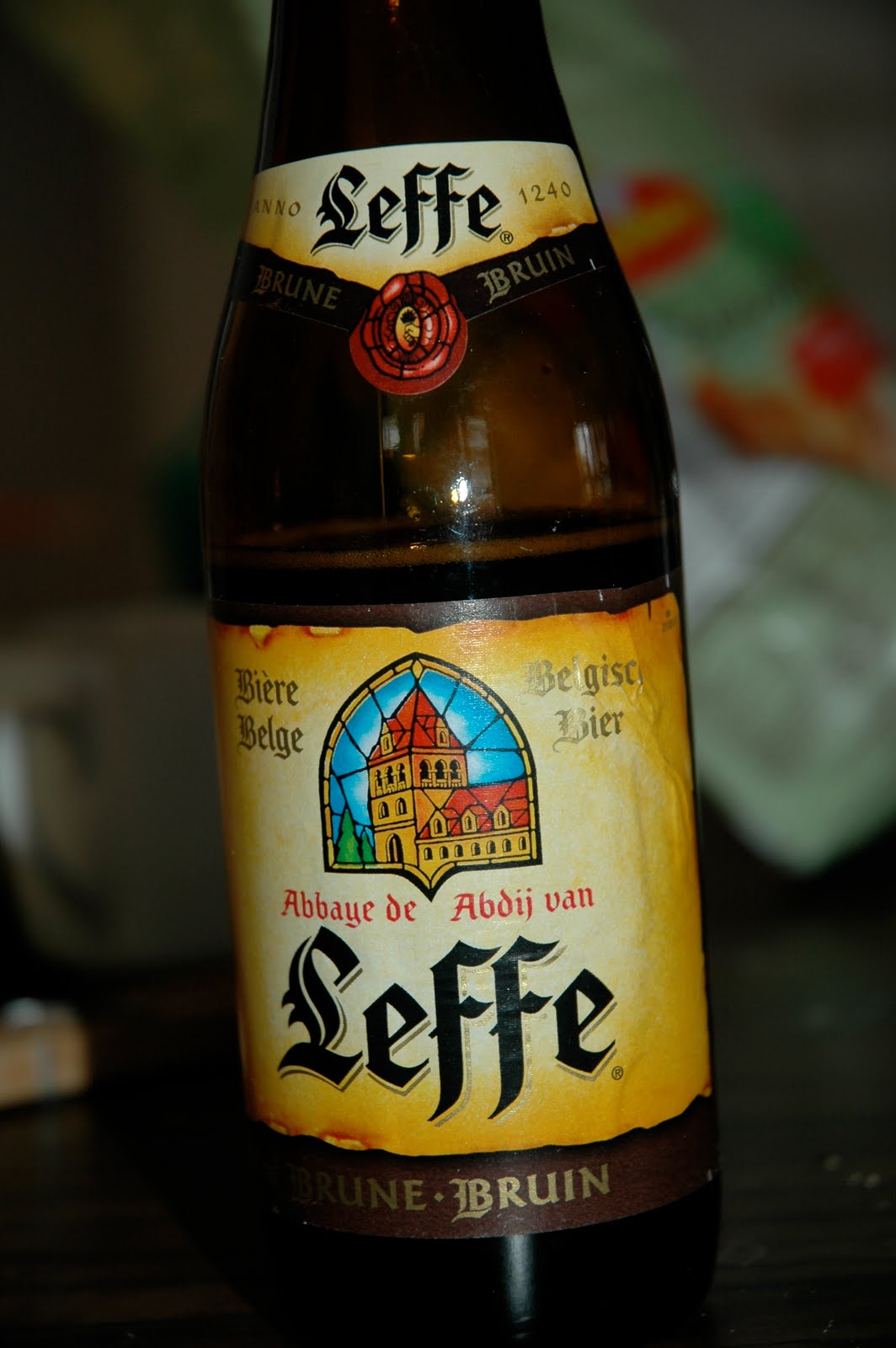
I've used the Belgian Leffe brown beer for this because it has a balanced subtle sweetness, and I like the malty notes it left in the chili. Use any brown or amber beers (or really any beer you feel like dumping into a soup pot) with a nice body and aroma. Plus it's always cool to cook with beer. 

5-bean chili with Leffe brown beer and chipotle peppers
Ingredients: listed in order of use
Yield: 4 servings, about 1 and 1/2 cups

1 and 1/4 cup dried beans, (any mixture of dried black beans, chickpeas, kidney beans, pinto beans, white beans) soaked and cooked; Canned beans are totally fine too. Use 2 or 3, 14 oz cans of different canned beans.
1 tsp olive oil
1 red onion
1 bay leaf
2 cloves garlic, chopped
1 cup Leffe dark beer, slightly more if foamy at first (let it reduce by half), 
1 cup chopped green bell pepper
2 Tbsp chili powder (recipe below)
1 small canned chipotle pepper, about 1 tbsp chopped pepper, add more for extra heat
remainder of beer
1 cup canned diced tomatoes
1 cup corn, frozen or canned
1 tbsp fresh lime juice
cilantro to garnish
1/2 tsp salt (to taste if not enough)
yogurt and shredded cheese (optional for garnish)

Chili powder:
1 T of smoked paprika
1 T cumin
1 T oregano (or other mixed herbs such as thyme, mint,)
1/8 tsp cayenne powder
1/4 tsp cinnamon
1/2 tsp salt
This is a variation that can be adjusted to your taste and preference. The smoked paprika is very delicious in this dish. I'd recommend adding a tsp to the chili just before serving. Mix all the spices together in a small bowl and set aside until ready to use.

Directions:
  1. Saute onions and garlic in the olive oil. Once the onions turn a bit golden, add in 1 cup or more of the beer. It will foam and settle down, releasing a delicious smell. Let it reduce by half, then add in the green bell peppers.
  2. Add in 2 T of the spice mixture and the chipotle peppers (a chopped chipotle pepper should be about 2 tbsp).
  3. Add the cooked beans to the pot along with the about 1 cup of the bean broth. If using canned beans, rinse and drain them (it removes the salty brine taste), and use 1 cup water instead. Pour the rest of the beer into the chili, along with 1 cup of chopped tomatoes. Stir to combine, turn up heat and simmer for 30 minutes. Before serving add in 1 cup of canned corn (if using frozen corn add it in 10 minutes before the chili is done). Stir in rest of beer and 1tbsp of lime juice.

Top with a dollop of plain yogurt, shredded cheese and garlic bread.

October 5, 2011

Beer Post: Orval

One weekend per year Orval holds an open door day where they allow a guided visit of their brewery. Orval is a Cistercian monastic community. Nestled into the southern Ardennes at the far southern tip of Belgium, the Orval abbey is breathtaking. A regular visit to the abbey allows the visitor to see the abbey ruins, and to tour the visitor center where the history of the abbey is explained, and there are brewing and cheese-making exhibits. Just down the road is an inn where you can sample some Orval beer and cheese.

Normally, brewery visits are not offered; the visit at Orval during the open door day was a self-guided tour. Signs explain the process of brewing, although they are in Dutch and French only. You can sign up from the Orval website; they usually begin the process a few months before their open door day. I'm going to keep my rambling short. If you aren't around during the time of the open door days, you can still visit the public areas of the abbey. Check their website for additional details.

Driving is probably the most straightforward way of visiting. Public transport is possible, but not easily accessible since trains from the Brussels area can take up to 3 hours to arrive, and busses may run infrequently. I'm not sure about biking because I haven't found any organized bike routes through the Wallonian regions. The abbey is very well maintained, Orval beer is some of the most delicious and unique in Belgium, and while exploring the ruins won't take all day, the area has plenty of hiking.

Orval Abbey

Orval Abbey


Love the Orval paraphernalia. 

Stained glass with brew kettles
The stained glass is impressive.

Open door day at Orval, Sept 16, 2011


Fermentation tanks


Checking out the abbey ruins.


Mathilde Fountain
Story of the fountain and the history of Orval here (including trout with the ring). 

Orval abbey ruins


Orval abbey ruins