Showing posts with label Indian. Show all posts

November 11, 2014

Uttapam

DSC_0432
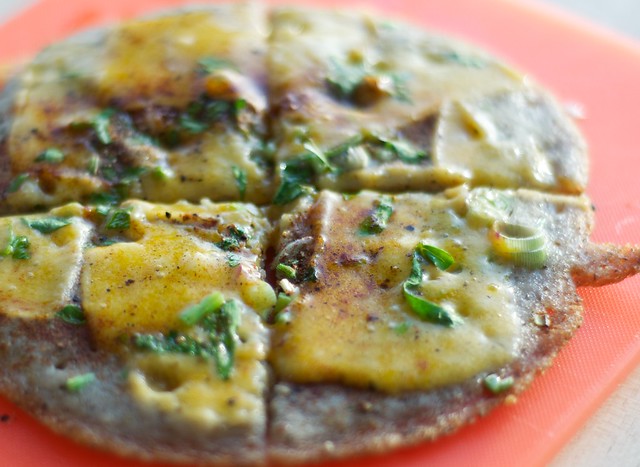
American uttapam (salt, pepper, cumin seeds, cilantro, diced onions and bell peppers, cheese)
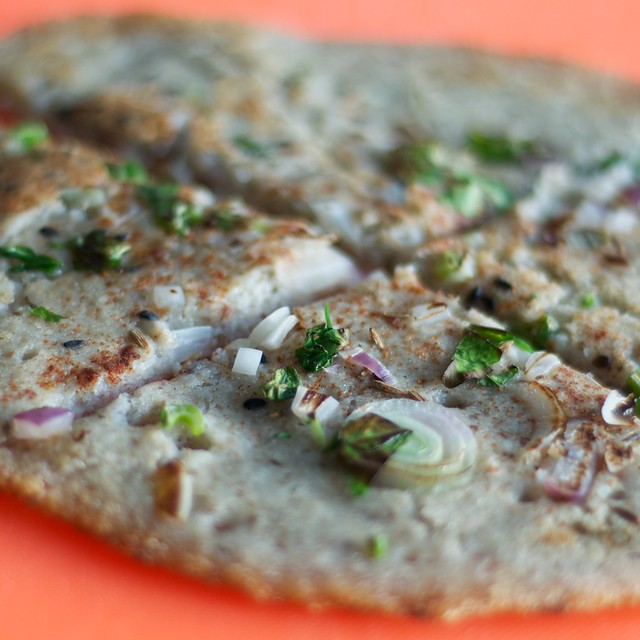
DSC_0418
Simple uttapam (salt, pepper, cumin seeds, cilantro, onion, paprika, sesame seeds)
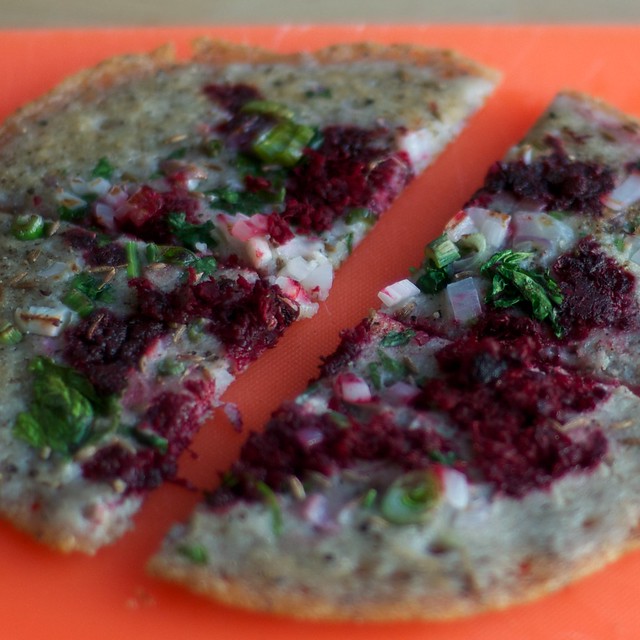
DSC_0435
More advanced uttapam (salt, pepper, cumin seeds, grated beets, chopped fennel)

With this recipe I must offer a disclaimer. Firstly, I am not South Indian.

Secondly, this recipe is not a hand me down from my mother, or her mother, or any long lost family relative from generations of genius cooks. This recipe is solely born out of my singular obsession with certain South Indian foods which happen to contain soaked rice and udad dhal.

Thirdly, I am an ABCD* that speaks fluent, funny sounding Gujarati. If you put a vegetarian south Indian dish in front of me, it will be devoured. Murukku have no chance of surviving. Your extra rasam will find it's way into my stomach. Any dosa batter you had on hand, will be carried out of your home. Idlis? Gone. *An ABCD is an American-born confused desi. Non-resident Indians (NRIs) that settled in the US, call first generation Indians ABCDs because of our broken sounding language skills and lack of proper desi identity. And the fact that I have lumped all the South Indian states into a single culinary tradition. 

My obsession has proven to be useful. For a few years, the only Indian dish I would prepare would be dosa and sambar. Sometimes I'd venture out and make idli's, or chole, but this dish was the only dish I'd prepare regularly. It's unfortunate, that I overlooked uttapam for so long because it contains the same traits that I love about dosa: the planning, the soaking, the grinding, the inevitable wait for the bubbly to occur. If dosa is a lean, crispy, fattening, thin rice crepe, then uttapam is the stocky, well-rounded, rice griddle pancake. But uttapam is so much better. You serve it like an upside down pancake, and while it cooks, you can add toppings to it, so it's kind of like a griddle-cake pizza.

Uttapam is made out of a base of white rice and udad dhal or split black gram. These two ingredients are added to a bowl, covered with water, and allowed to soak overnight. Once done soaking, they are blended together, allowed to rest in a warm spot overnight, and then given a few last minute additions before being the world's answer to the best damn savory pancakes.

So how can you make it? You need four main ingredients: long-grain white rice and brown rice, yellow split peas, and udad dhal. I know - this list seems long, however these ingredients are shelf-stable and don't require much storage room. And once you start preparing the batter weekly, you'll have all the ingredients in your larder. Of these essential ingredients, udad is key. It's sold as urad, udad or black Bengal gram, and is often sold in one of three ways: 1) whole and peeled so it looks white, 2) it is sold split with the black skins on, or 3) it is sold split with no skins. Any variety of these will work. I have tried them all. While not common in grocery stores or co-ops, urad dhal can be purchased online, or a south Asian grocery store.

Finally, I want to note here that I've experimented with different types of lentils so that you won't have to. I've experimented with different ratios of lentils to rice. Of the lentils, I've tried: yellow-split peas, red lentils, green split peas, regular grocery store lentils, and mung beans. I find that udad dhal works the best, and I like the body the yellow-split peas provides. Since I wanted to try healthier types of whole grain rice, I've also tried different ratios of: white and brown basmati rice and white jasmine rice, grocery store regular brown rice, grocery store regular long grain rice, parboiled long-grain rice, forbidden black rice, and red wehani rice. Of these rices, all of the long-grain varieties worked, but the forbidden black rice and the red rices were too starchy and caused the uttapam to stick when cooked. So far, I found half white rice and half brown rice to be a good cooked consistency.

Ready to get started?
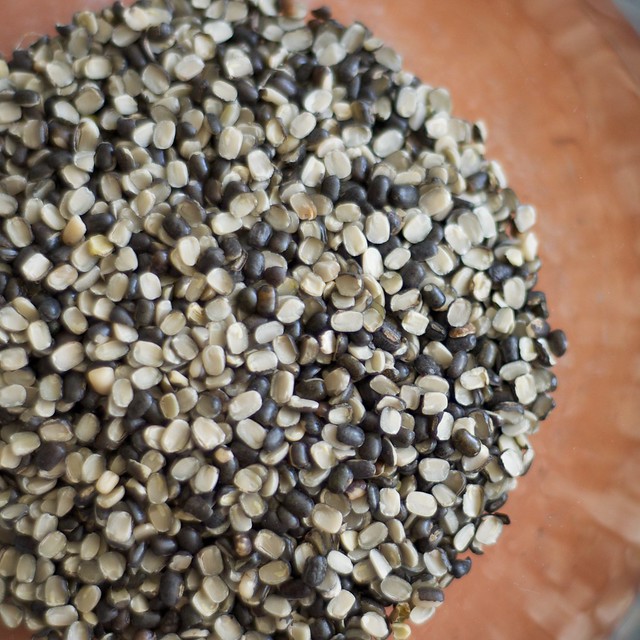
DSC_0010
For my uttapam, I add 1/2 cup (100 g) udad dhal to a large bowl.
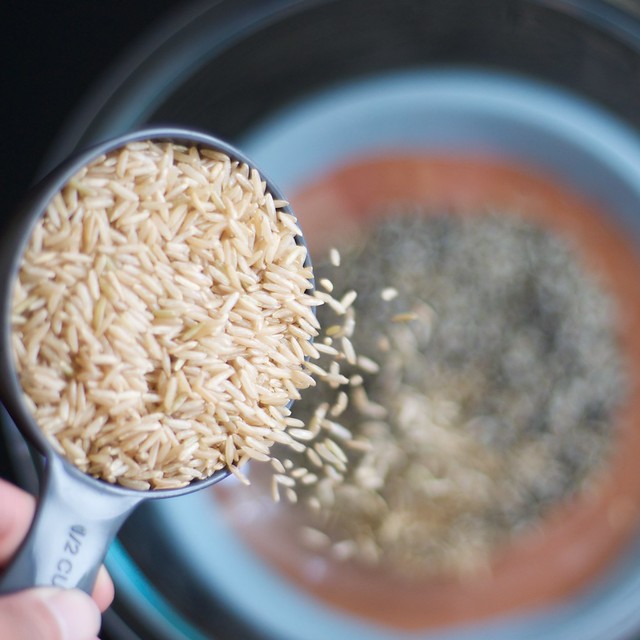
DSC_0043

DSC_0054
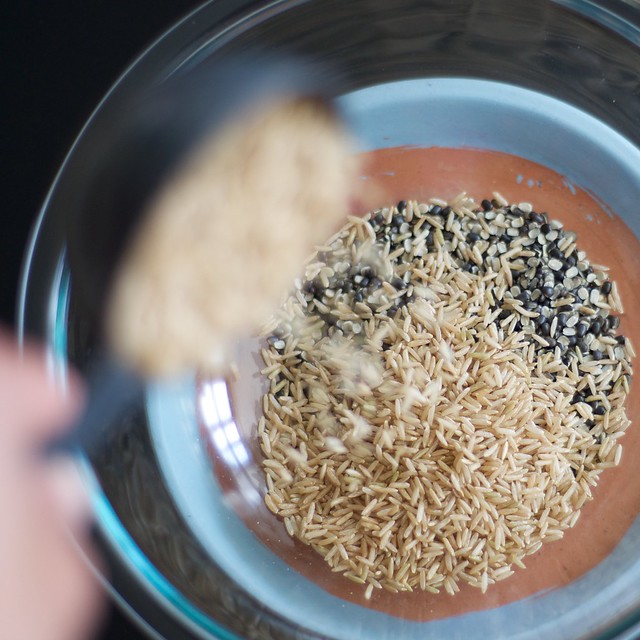
Then I add 1/2 cup (105 g) of long-grain organic brown rice (these pictures were fun to take).
DSC_0066
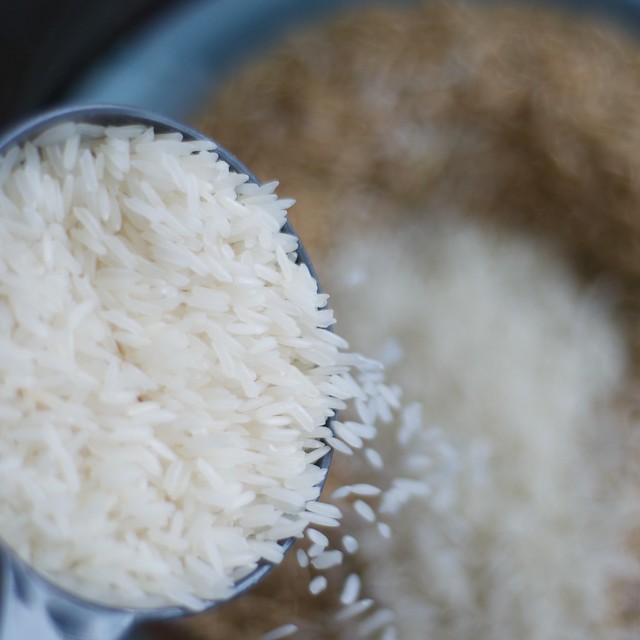
Next, add 1/2 cup (120 g) of long-grain white rice.
DSC_0085
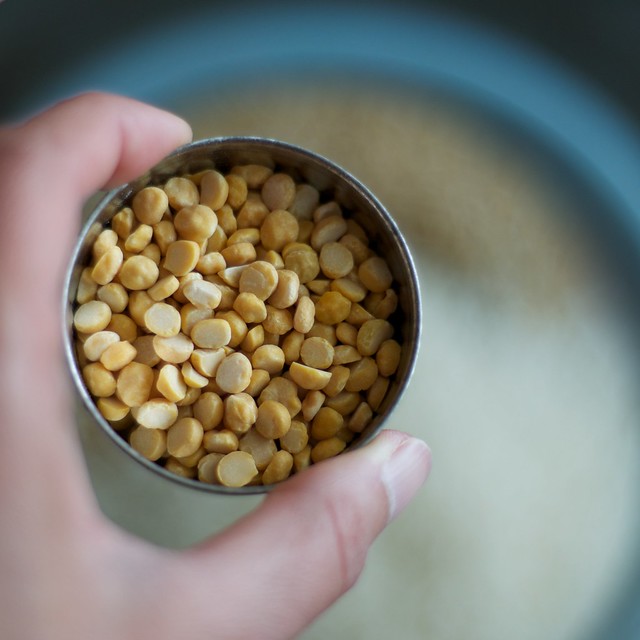
Next, add 2 tbsp (25 g) of yellow split peas (or channa dhal) to the bowl.
DSC_0100
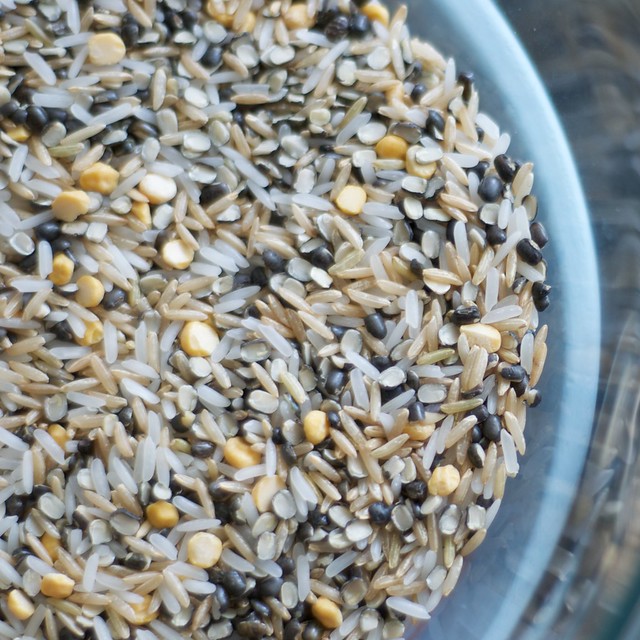
Once these 4 ingredients have been added, stir the contents of the bowl. The next step is adding water and then letting the lentils and rice soak overnight.
DSC_0122
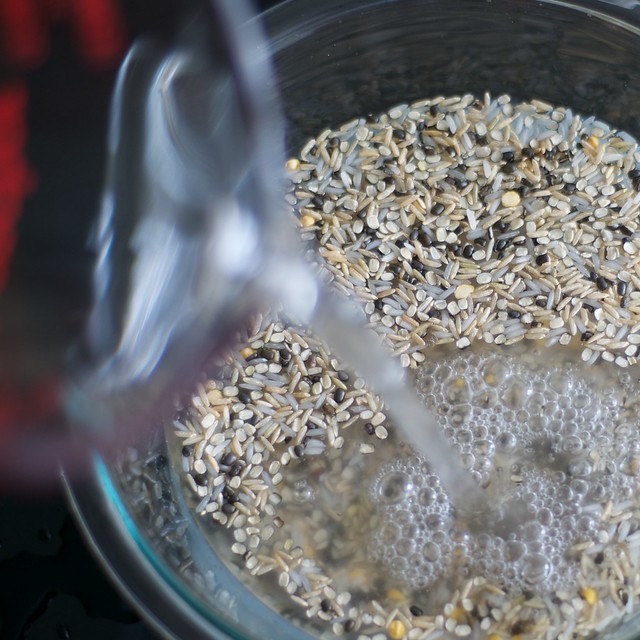
Pour in about 2 cups of cold water and let it soak overnight. I like to place a plate on top and then place the bowl in the oven.
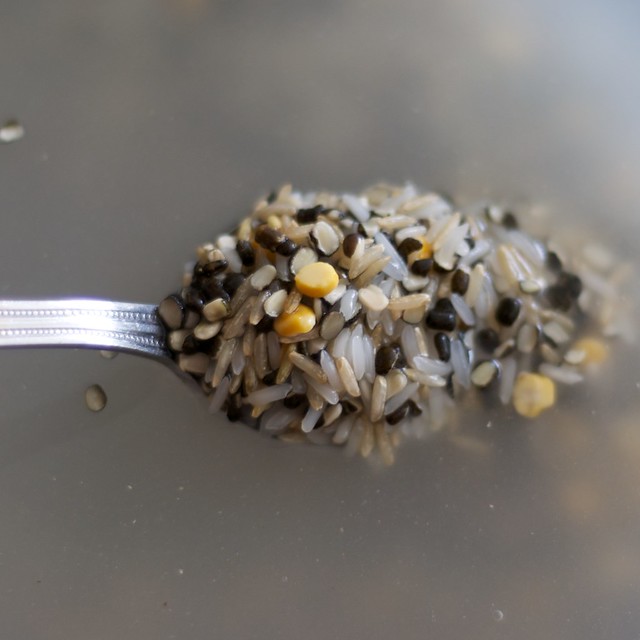
DSC_0136
The soaked lentils and rice should like this after pouring water into the bowl.

Then, the next day:
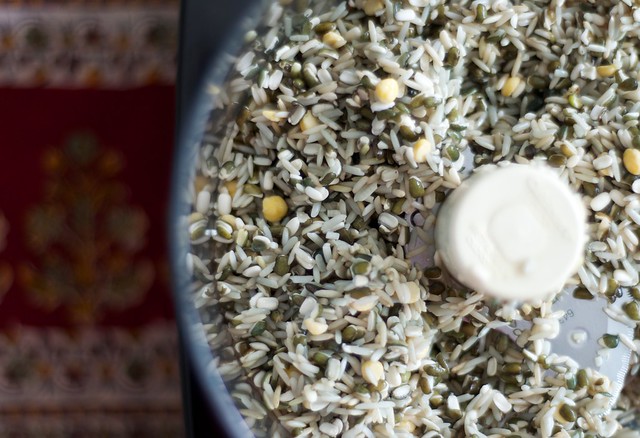
DSC_0234
Drain off the water from the soaked lentils and rice, and add them to the food processor. Make sure the mixing blades are in the food processor. The udad dhal may look green. That's ok.
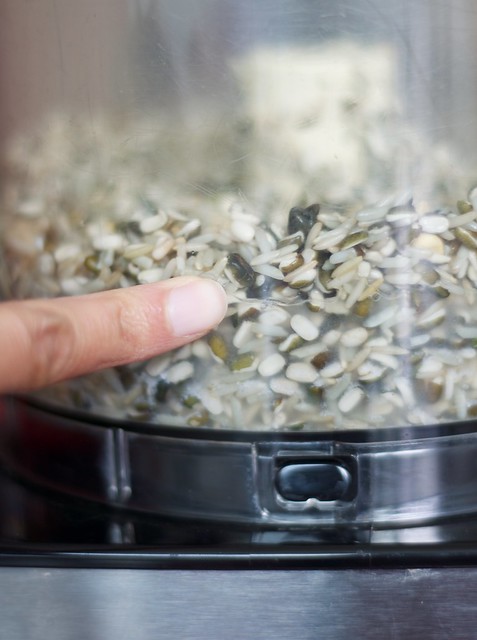
DSC_0246
Pour in about 1/2 cup to 1 cup of water. This is about how much water is needed. About 2 tablespoons of plain yogurt may be added at this step.
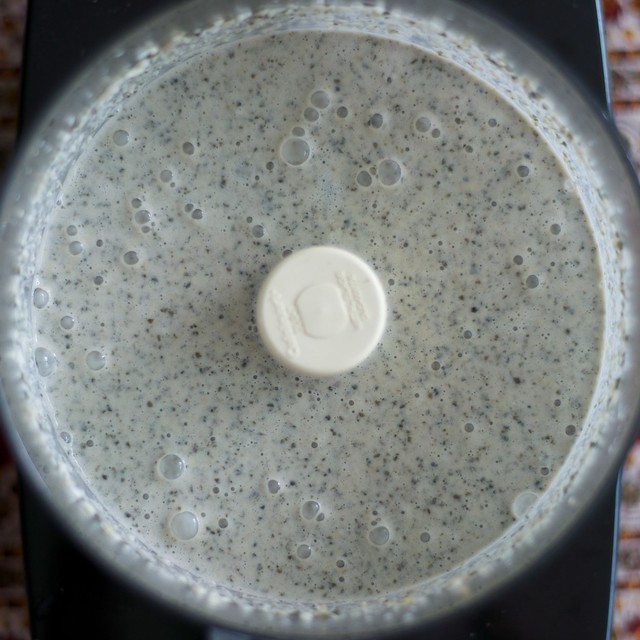
DSC_0252
Blend for 1 minute. Scraping down the sides with a rubber spatula. Process for 15 second to 30 second intervals until the texture is uniform.
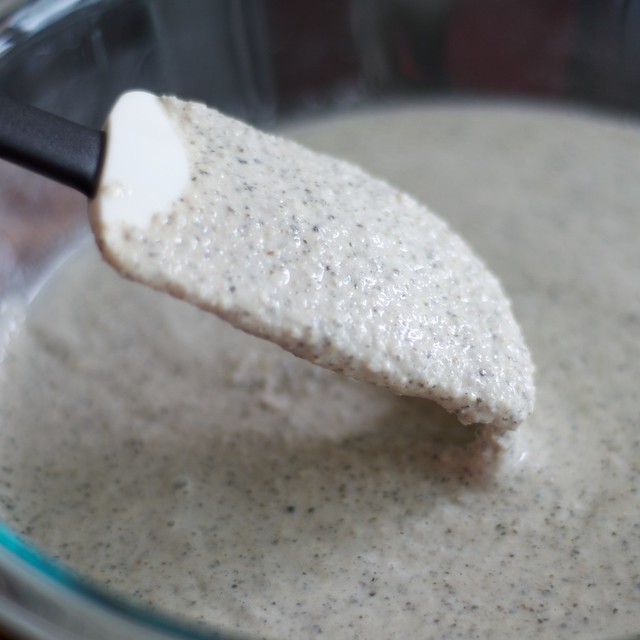
DSC_0302
The uttapam batter is ready to rest. Now at this step, the uttapam batter should be covered with a plate or plastic wrap, and placed in a warm area to ripen. This can take a few hours to overnight, depending on how warm your kitchen remains. I like to place the bowl in the oven.

The recipe follows below. While this might not be an authentic recipe, it's easily replicable in any kitchen with a blender or food processor.

Neeli's inauthentic tasty Uttapam
Yield: 4 servings, such as 2 to 3, 6" uttapam per person. This recipe is best thought of as prepared in multi-day steps. Day 1: soak ingredients. Day 2: blend ingredients and allow them to rest. Day 3: Eat! Repeat! I recommend serving for lunch or breakfast. 

Special tools: a large mixing bowl, a food processor, patience and curiosity.

Day 1: Foundation for batter (these ingredients will be soaked together)
1/2 cup (100 g) udad dhal (please note that split black gram, whole black gram, peeled split black gram, or unpeeled split black gram will all work fine)
1/2 (120 g) long grain white rice (basmati, jasmine, or regular grocery store long-grain rice, I prefer organic)
1/2 cup (105 g) long grain brown rice (basmati, jasmine, or regular grocery store brown long-grain rice is fine, I prefer organic)
2 tbsp  (25 g) yellow split peas or channa dhal, mung beans can be OK too here, although sometimes they sprout if left to soak for too long.
2-4 cups water

Day 2: Blending time
the drained rice and lentils
2 to 3 cups of water, may reserve the soaking water, or can use fresh water.
2 T to 1/4 cup yogurt (can be omitted)

Directions for Day 1 and Day 2:
Step 1: I rinse the rice and the lentils. Purists will not rinse, but these are organic products from the earth, and I have made three batches where a stone, yes a stone, has been ground into the batter. Trust me, NO ONE wants to bite down on a stone, and tiny stones are not good for your blender or food processor blades. Rinse the lentils and rice well. After rinsing, add them to a large mixing bowl and cover with water. Cover the bowl and let the lentils and rice soak for 1 day, or overnight. For example, you may soak the lentils and rice overnight. Then, the following day the rice and lentils can be blended in the morning. Alternatively, you may soak these together before going to work in the morning, and when you get home you can blend the batter.

Step 2: Drain the water from the soaked lentils and rice. Inspect the rice and lentils carefully for any loose stones or rocks. Set aside about 2-3 cups of water. We will not use all the water.

Step 3: Place the drained and soaked rice and lentils into the work bowl of a food processor, or blender. Pour in 1/2 cup to 1 cup of water into the work bowl.  Process or blend together for about 1 minute. After 30 seconds, stop the blender or food processor and use a rubber spatula to scrape down the sides. Only add water if it's too dry. We want a batter with the consistency of pancake batter. Continue processing until all the lentils and rice are uniformly blended. We will not use all the soaked water.

Step 4: Now, a controversial step. I add about 1-2 tbsp of plain yogurt to my batter to kickstart the fermentation, and add a bit of sourness to my batter. Kataash perhaps (a slight tang or pleasant sourness). I add it towards the end of the blending time. For example, once my batter has reached the proper consistency, I pulse in some yogurt until well blended.

Step 5: Turn out the batter to a bowl and cover with plastic wrap or a towel. The batter can be allowed to rest on the counter or in the oven. After a day, place it in the fridge until ready to make. I find it helpful to place reminders on my cell phone to avoid forgetting about the batter.

Day 3: Cooking time
Yield: 4 servings, such as 2 to 3, 6" uttapam per person.
1 recipe of uttapam batter
1/4 cup semolina or sooji  (common ingredient in couscous, and processed into Cream of Wheat)
1/2 tsp salt to taste
1/8 tsp baking soda
Oil (peanut or olive is fine)

Toppings:
flaked sea salt and fresh black pepper
fresh cilantro, chopped
sliced jalapeno rings, remove seeds
cumin seeds, whole
paprika, ground
shredded carrots or beets
diced onions and bell peppers
cheese, cheddar or mont jack
Other nice toppings: chopped fennel, diced tomatoes, diced avocado

Cooking Directions:
Step 1: To the batter, add about 1/4 cup of semolina (sooji), salt to taste, and a thick pinch of baking soda. Stir to combine. The semolina is a non-stick trick.  If omitted, the first few uttapam will stick to the pan, but will eventually stop once enough oil is used. If omitting the semolina, be generous with the oil.

Step 2: Meanwhile, heat up a non-stick griddle, or a cast-iron over medium heat. Add some oil and once hot, pour in about 1/4 or 1/3 cup batter. I like to use a measuring cup or ladle. The batter will spread out, and you can help it.  Drizzle a little oil around the edges. Cook for 1-2 minutes over medium heat. Now, to the toppings.

Step 3: The uttapam can be topped with anything. I like these variations:

Simple: salt, pepper, cumin seeds, cilantro, onion, paprika.
Advanced option 1: salt, pepper, cumin seeds, grated beets, chopped fennel.
Advanced option 2: salt, pepper, cumin seeds, cilantro, paprika, diced fennel
American: salt, pepper, cumin seeds, cilantro, diced onions and bell peppers, cheese

4. Add the toppings of your choice, cook about 3-4 minutes longer, and if desired flip over to cook bottom. The flipping over step may be omitted. Serve immediately toppings side up, with some fresh tomatoes, cilantro chutney, and yogurt.

August 9, 2014

Coconut Yogurt Rice

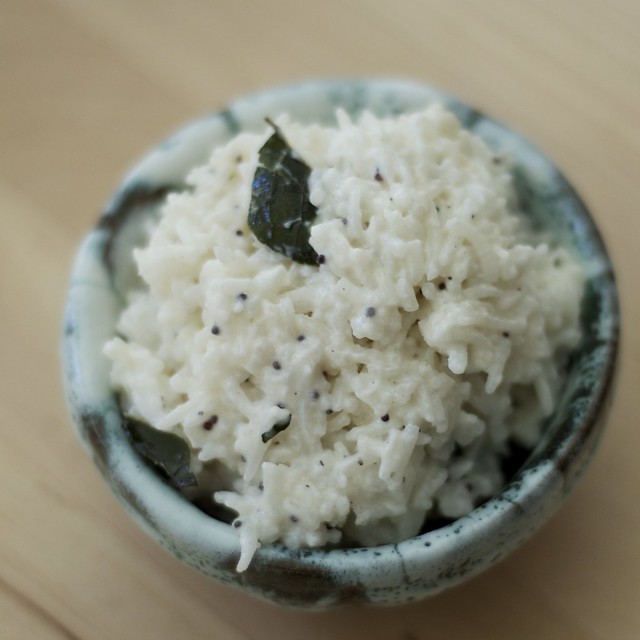
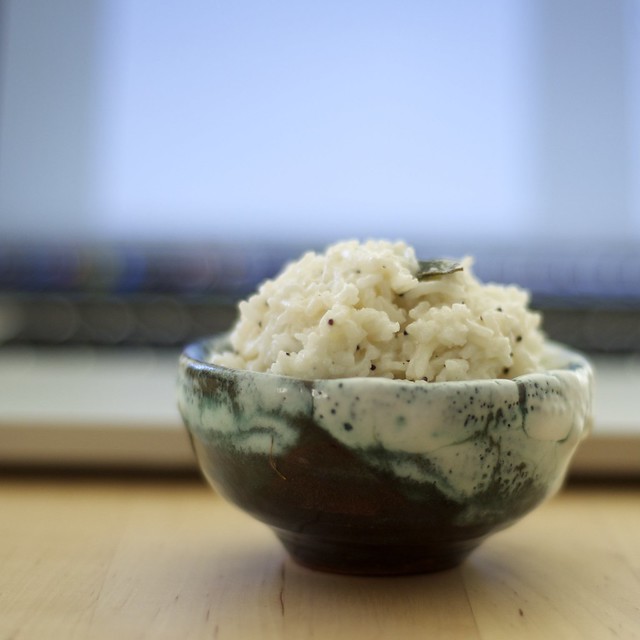
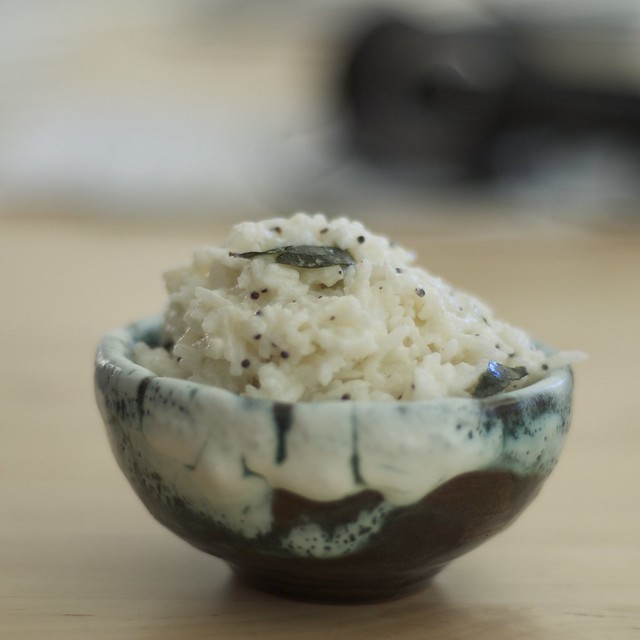
coconut yogurt rice

coconut yogurt rice

coconut yogurt rice

I keep showing up with this dish everywhere I go. Hey let's go on a picnic. What did you bring? Oh nothing, just this rice. Come over for lunch. What did you make? Oh just this rice dish and some salad. Hey it's lunch time, what do I have that I can eat quickly? Oh just this rice.

Years ago when I lived in Houston, my family and I would head out to the Sri Meenakshi Hindu temple in Pearland, TX, and then stay for lunch - eating just prepared homemade tamarind and yogurt rice. The kitchen staff would prepare fresh batches, and it was fun to watch them mix up the rice in these enormous stainless steel bowls. Half the family was split on yogurt/curd or dhai rice, and the other half were tamarind rice, so we'd get both, and sit on the temple grounds enjoying a sunny Sunday or Saturday. Then we'd get ladoos.

I've made this three times in the past two weeks. My mom has been sending me home with lots of delicious home cooked leftovers, and one day I had so much rice I made this. Making yogurt or dhai rice is really easy. Take leftover long grain rice, and then add plain yogurt, and some seasoned oil, and mix together, and then serve. Comes together in minutes if you have enough leftover rice. My yogurt rice is completely inauthentic, but it tastes good, and everyone that has tried it so far has asked for the recipe.

Coconut Yogurt Rice
Yield: 4 servings, split however you like

Ingredients:
4-5 cups cooked white rice, preferably Basmati rice
1/2 cup yogurt
1/3 cup unsweetened coconut, ground to a fine powder
salt and pepper

Ingredients for Vaghar:
1 tsp mustard seeds
pinch hing (asafoetida) can be omitted (ask for it at a South Asian grocery store)
4-6 mitto limbdo/curry leaves
2 tbsp peanut oil

Directions:
1. If using leftover rice that has been chilled in the fridge, heat it back up with a bit of water. It will make mixing everything easier. Add the rice to a large mixing bowl, such as large pyrex or other large stainless steel mixing bowl. Add the yogurt, coconut, and salt and pepper. Stir to combine.
Note: you can also use just cooked rice. It will be good too, but chilling the rice first keeps it more toothsome and less mushy. 

Next we are going to make a vaghar. Use an oil with a high smoke point like peanut oil. Add the oil to a small pot, like a small saucepan, and when hot add in spices and fresh herb leaves to infuse the oil with the aromatics. Usually the vaghar can be poured over something as a finish, or things can be added to it to such as done when cooking. Let's do the vaghar:

2. In a small saucepan with a lid, heat up the peanut oil. When hot add in mustard seeds and hing and cook until the mustard seeds pop. Add in the mitto limbdo leaves, and close the lid, turn the heat off and let cook for 1-2 minutes. Pour the vaghar over the rice. Stir everything together. Adjust salt if needed. Serve immediately. 

Yum. 

March 19, 2012

Khadi

Khadi
Khadi a chickpea flour and buttermilk soup seasoned with curry leaves, cumin seeds, and turmeric.

Vajra Chickpea flour
Chickpea flour, or besan.

Khadi is a Gujarati soup made out of chickpea flour and buttermilk and seasoned with curry leaves, cumin seeds, and turmeric. It's often served with basmati rice in a thali, or it's served on top of kitchdi. Kitchdi is a rice and lentil dish, where they are both cooked together with minimal seasoning.

Kitchdi and khadi are Guju comfort food for me. Growing up, if we had come home from a trip or vacation, and the fridge needed restocking my parents would serve this; if there was nothing to cook, my parents would cook this; if we got sick, my parents would cook this. This is truly a dish you will not find at any restaurant. It is simple down-home Gujarati cooking, and one I'm sure that is passed on as tradition. Thus, the flavor varies widely, but that is half the fun. This is not a hard dish to make, but it does take a bit of pre-planning in that you need buttermilk, chickpea flour, and a few of the spices. Follow the directions as closely as possible.

Mitta limbda or mitto limdo (basically curry leaves), or cilantro are key in lending and infusing khadi with its distinctive flavor. If you can't find curry leaves, sub in generous amounts of cilantro - honestly as much as you think you'll like, I would go for 1/2 cup chopped. Although most Gujarati cuisine is sweetened with some sugar, my mom's version (and to a much larger extent all of her cooking) lacks unnecessary sugar. The basic flavors of buttermilk, cumin seeds, cilantro, and turmeric really carry this dish.

Khadi
Chickpea flour and buttermilk soup seasoned with curry leaves, cumin seeds, and turmeric. 
Serves: 2; recipe by my mom. 


Ingredients:
2 tbsp of chickpea flour (such as besan flour) plus 1/3 cup water
1 cup buttermilk (can substitute yogurt)
2 cups water
1 tbsp olive oil
1/2 tsp whole cumin seeds
1/8 tsp udad dhal (optional)
1/8 tsp fenugreek seeds (optional)
pinch asafoetida or hing (optional)
6 curry leaves
2 tbsp chopped cilantro; increase to 1/2 cup chopped cilantro if omitting curry leaves
1/2 - 1 tsp salt, add less if your buttermilk or yogurt is salty
1/4 tsp turmeric

Directions:
Dissolve the chickpea flour in a small amount (approx 1/3 cup) of water in a small mixing bowl large enough to hold 3 cups. Whisk it together (with a whisk) until it is smooth and there are no clumps. Then add the rest of the water and buttermilk. If you don't have buttermilk, yogurt is a fine substitute; in Belgium, I used plattekeis and it was delicious.

Next in a heavy bottom pan, heat up 1 tbsp olive oil (butter or ghee is much better) over medium heat. We're going to do a vaghar (and now you know a word in Guju too). A vaghar is like frying seeds and lentils, and infusing the oil with some of the aromatics from the seeds or lentils. To the oil add in 1/2 tsp whole cumin seeds, 1/8 tsp udad dhal, 1/8 tsp fenugreek, and a pinch of hing or asafoetida. Once the oil begins to get hot, the seeds and lentils will give off a nice fragrance. Don't let them brown too much.  If using curry leaves, add them now. They only need a bit of time and you don't want them to brown. Turn the heat to low.

Make sure you turn the heat to low. When everything is simmering, very carefully pour in the buttermilk/chickpea flour mixture. Stir it together well, and then add in cilantro, salt and turmeric. Stir together. Leave a stainless steel spoon in the khadi. This will prevent it from bubbling over. Stay with the khadi. It will overflow if ignored, and then you'll end up with a big mess. Keep an eye on it, stir it frequently. Adjust for salt. The khadi should be done in 20-25 minutes.

Serve, steaming hot, with some plain cooked rice, or kitchdi (recipe will be posted soon), ghee, and papad.

February 21, 2012

Chevdo or Indian hot mix with spicy cornflakes and peanut snack


Chevdo

DSC_0450

Dry roasted pumpkin seeds, raisins, and fennel; fresh grated lemon zest

Chevdo

Chevdo is ubiquitous breakfast food in any south Asian household. It shows up at breakfast and snack times; it is carried on trips and packed with lunches often served with masala chai or coffee. It's basically spicy hot cornflakes or rice flakes, fried or toasted, and mixed together with hot peanuts, fried lentils, fried gram flour vermicelli (sev), rice crispies, and loads of red chili. I like it simple and healthy: a bit spicy, crunch from cornflakes, and pan-roasted peanuts balanced with toasted fennel, raisins, and pumpkin seeds. A ready made red chili garlic powder makes this really easy, but could easily be replaced with red chili, dried garlic powder, ground sesame powder, and lemon zest (or citric acid) or try this version here. If I'm not consuming chevdo in the morning along with my coffee, I really love it as a pre-dinner snack with a cold spicy Saison Dupont, or a citrusy witbier (wheat beer) such as Hoegaarden. It's great with masala tea or coffee as well.

Chevdo
South Asian or Indian spicy cornflakes with peanuts, raisins, and fennel seeds.

Ingredients:
1-2 tbsp peanut oil
1/2 cup or more raw peanuts
1 tsp whole fennel seeds
1/4 cup raisins
2 tbsp pumpkin seeds
4-5 cups cornflakes
1/4 tsp salt
1/4 tsp turmeric
1/4 tsp lemon zest
1 heaping tbsp dry garlic chili powder (such as this one from Deep foods, also called thechaa
Optional: popcorn, rice crispies, fried lentils, vermicelli (sev), toasted rice flakes (poha).

Directions:
In a heavy bottom pan (such as one to boil pasta) heat up 2 tbsp of peanut oil over medium heat. Once hot add in peanuts and roast over medium low heat for about 10 minutes. I used to never use the oil but I found the spices would all fall to the bottom,  after trying it both ways, I'm happy using between 1-2 tbsp.

*Once the peanuts are done, turn the heat to low and then add raisins, they will plump up quickly. Add the pumpkin seeds, and fennel seeds. Add 1/4 tsp turmeric and salt and stir around. Add in 4 cups of corn flakes and stir together. Add in the dry garlic chili powder and the lemon zest, along with the last cup of cornflakes. Stir everything together. Tossing the pan back and forth is a good way to mix everything up without breaking the cornflakes.

*Note: My mother corrected my directions which have been updated from the original version. She is a minimalist at heart, so she could see no reason to dirty another pan which the original version had. I opt to roast the fennel seeds, raisins, and pumpkin seeds separately, but her chevdo is truly the better one so I updated my directions to reflect moms. Bus? Tik hé?

January 26, 2012

Royal tofu with king oyster mushrooms


I vegetarianized this recipe from royal chicken cooked in yogurt from Madhur Jaffrey's Quick and Easy Indian Cooking to royal tofu with king oyster mushrooms (royal theme, get it!). If the yogurt is simmered down, or cooked too long, it will separate. Lower fat yogurts separate a bit more than full fat yogurt. Add the yogurt sauce at the very end, almost as a finishing touch. Give it a quick stir to heat up, then turn the heat off and serve immediately. Serve with some red lentil dhal, rice, and papads. Lekker!

If you use chicken instead of tofu, it can be prepared almost the exact same way; cook the chicken first, and follow the directions here. Although I guarantee that prepping tofu is cleaner, and has much less of an ick factor when cutting and managing. Ew. Raw uncooked meats are *so* gross.

I'm following an online photography class that the hubs showed me from Reddit; I got a new camera, and I'm learning how to use it and become familiar with it. I know some of these pictures on the past few posts have been blurry, but you wouldn't believe me if I told you that I took over 107 images (of mushrooms! of this dish! insanity! of brownies!) and they all managed to be blurry. Boohoo. So, I'm learning.

The full album of the new First Aid Kit is now on the free version of Spotify. See I give you music recs, beer drinking recs (with this dish a cold, crisp, and bland pils - Stella - would be good), and good recipes.

Royal tofu with king oyster mushrooms
Serves: 4

Ingredients:
1 package extra-firm tofu, drained and pressed.
2 tbsp peanut oil for pan frying tofu
4 king oyster mushrooms quartered, or 2 cups regular white button mushrooms, sliced
(Note: measure out whole mushrooms then slice)
1/2 tsp mustard seeds
1/4 cup red onion slices, plus about ¼ cup more finely diced onion for garnish
1 bay leaf
4 whole cardamom pods (remove, when you serve)
2 cinnamon sticks (or ½ tsp cinnamon)
few cloves
¼ cup raisins
2 tbsp slivered almonds

For yogurt sauce:
1 cup yogurt
1 tbsp chopped ginger
2 cloves garlic slivered
1 tsp coriander
1 tsp cumin
1/4 tsp cayenne pepper
1/2 cup chopped cilantro and chopped green onions
salt to taste

Directions:
  1. Press the tofu and set aside. Meanwhile add about ½ tbsp of oil to a cast iron pan or non-stick skillet (medium-high heat) and saute the mushrooms. Remove from the pan once done.
  2. Make the yogurt sauce by combining the yogurt with ginger, garlic, coriander, cumin, cayenne powder, cilantro, and green onions. Adjust for salt and spices.
  3. Add enough peanut oil (2 tbsp or less) to the cast iron or non-stick pan and heat over medium-high. Cut the tofu into cubes, and lightly salt. Once the pan is hot, add the tofu to the pan being careful not to crowd the pan. Don’t touch the tofu for at least 5-7 minutes. Let it sit there until it begins to get golden on the brown. Even then, try not to touch it. Give the pan a few shakes, once the tofu becomes unstuck, it’s ready to flip. Be patient. Continue adding tofu to the pan, and cooking it the same way. You’ll end up with perfect pan-fried golden tofu. Remove from pan once done.
  4. To the same pan, add in mustard seeds. They should pop fast. Then add in onion slices, bay leaf, a few cloves, whole cardamom pods, and cinnamon sticks.
  5. Toss in a handful of raisins and almonds. Once the raisins begin to plump (it should be very fast), add in tofu and mushrooms, and follow it up with the yogurt sauce. Stir it around enough to heat everything through, then turn off and serve immediately. Garnish with extra cilantro and finely diced onion.

December 30, 2011

Red lentil dhal served over rice


As the holidays wind down it’s nice to have a hearty and healthy meal after days of gorging and drinking. I recently bought some Delhaize brand curry powder (no salt added) and found it fresh and delicious. I added it to these lentils along with some vegetable broth and this is the curried outcome.

This holiday we traveled by train to visit family. It was a nice relaxing way to get from one place to another. Earlier, Belgian rail strikes scared us into thinking that we’d have no trains for travel. After the strikes settled down tickets were purchased and rail travel resumed as normal. While I think car and air travel have their obvious advantages (e.g speed, setting your own schedule, convenience), it was especially wonderful to walk to the train station, sit down, read, and let the trains take us.

Happy Holidays!

Red lentil dhal served over rice
Serves: 4

Ingredients:
1 cup uncooked rice, prepared according to package directions
1 tsp olive oil
¼ tsp mustard seeds
¼ tsp cumin seeds
asafoetida (pinch)
few pods whole cardamom
1 cup onion, chopped
1 tbsp ginger, grated over a small hand grater
½ tsp cinnamon
red chili powder to taste; I used ¼ tsp
½ tsp garam masala
2 tsps curry powder
1 cup red lentils (masoor dhal), washed and drained
2 cups vegetable broth or water, plus 1 cup water extra

Directions:
  1. As always, hard to find spices can be omitted - any store bought curry powder will do. Begin cooking rice. Put 1 cup long-grain rice in a pot and fill with 2 and ¾ cups water (or according to package directions).
  2. Heat up about 1-2 teaspoons of olive oil in a medium size pot over medium-high heat. Add in mustard and cumin seeds. Once the mustard seeds begin to pop, add asafoetida and cardamom pods. Add onions and stir-fry lightly. Stir in ginger, cinnamon, red chili powder, and garam masala.
  3. Stir these until fragrant. Add in red lentils along with 2 cups vegetable broth or water. Stir and bring to a simmer. Stir this frequently. When the lentils have been cooking for at least 10 minutes, stir in curry powder and adjust for salt.
  4. Turn the heat to low and add in 1 cup of water. Simmer on low heat, partially covered, until the desired thickness is reached. Serve over rice. This last step should take about 20 minutes.

December 14, 2011

Bhajias two-ways with applebutter chutney

I keep thinking I'm going to have an epiphany of an awesome intro to these amazing bhajias (chickpea flour fritters), but I never come up with anything better than, these are delicious and next time you break out the home deep fryer, put these on the list (as evidenced terrible writer's block). On a recent visit back to NC (which geographically falls in the southeast, ahem, Sara) my friend, Nick (who is basically the best cook ever - you too Nico), made sweet potato fries spiced with brown sugar, garlic, and a pleasant dusting of cinnamon, half a dozen pizzas, and amazing sweet potato latkes (it should be noted that the fries were the only thing that went into the fryer). Since getting back to Belgium I've been in a rare no writing funk. I honestly think I'm reverse homesick.

These bhajias are filled with minced onion and chilies (chili's, chile's, sp?). My mom swears by using wheat germ in the batter because they soak up less oil and produce a crispy batter with bite. Sara are you still reading? Because you have to make these and bring the deep fryer back. Then as if those spiced ones weren't good enough, we went and made another batter for banana bhajias. Oh hell yes we did. Served with some apple butter chutney these are best served immediately. Random side note, go and listen to the new Drake album (solid throughout), and then when you are done, go listen to Yelawolf (I'm a big fan of the tracks in the middle of the album).


Bhajias two ways with applebutter chutney
(chickpea flour fritters)
Yield: 4-6 servings

Ingredients:
1/2 cup diced onion, fine dice
1-2 jalapenos, sliced very fine
3/4 cup chickpea, or besan, flour
1/2 cup wheat germ, fine ground
1/2 tsp sanchar (contains black salt, pepper, and citric acid), optional
1/8 tsp citric acid powder 
1/2 - 1 tsp garam masala 
1/4 tsp or more red chili powder
1/8 tsp baking soda
1 tbsp yogurt
1/2 tsp turmeric
1 tbsp brown sugar
oil, such as peanut oil, enough to fry

Directions:
Mix everything (onion through brown sugar) together and add enough water to make it pasty. Heat up oil in a fryer. Once hot drop heaping teaspoonfuls into the hot oil and fry until golden brown. 

Apple butter chutney
Ingredients:
1/2 tsp cumin
1/2 tsp coriander
1 tsp fresh lime or lemon juice
water to thin
1/2 cup apple butter

Directions:
Mix together all ingredients. Taste to adjust for seasonings. 


Banana Bhajias
(Chickpea fritters with bananas)

Ingredients:
1-2 firm bananas, sliced into wide coins
1/4 tsp turmeric
water to make pasty
1/2 cup chickpea flour (preferably black chickpea flour because it is finer)
1/2 - 1 cup wheat germ, fine ground
water to make it pasty
1-2 tbsp yogurt
oil, such as peanut oil, enough to fry. 

Directions:
Mix everything together and add enough water to make it pasty. Heat up oil in a fryer. Drop the banana coins into the batter and carefully drop them into the hot oil; fry until golden brown. Remove with a slotted spoon to a glass dish lined with paper towels. 

November 22, 2011

Yellow split pea and calabash squash curry

Yellow split peas
Split yellow peas.

Calabash squash
Calabash squash, a type of young bottle gourd.

Sauteing onions
Onions, ginger, and garlic sauteing along with fenugreek, udad dhal, and mustard seeds. 

Chopped and peeled calabash squash
Prepping the calabash squash.

DSCN0002
A thicker consistency before adding the split yellow peas.

DSCN0004
Thin the dish with enough water to let everything fill out.

DSCN0006
Squash chunks get added.

Yellow split pea and calabash squash curry

June 14, 2012 update: Laura, of the ever-spectacular Hip Pressure Cooking, was kind enough to share my (mom's) recipe in her Reader Recipes. I've been a fan of pressure cooking for a long time, and her cooker reviews and lessons can be transformational to anyone that cooks. Her approach is to bring this method of cooking to about any cuisine, and after scanning her pics, she pretty much nails them. My personal favorites (those I have bookmarked until I get my own pressure cooker) of Laura's are: tamales, eggs, crema Catalana, and artichokes.

If you're new to pressure cooking, but are intrigued and curious, check out the July 2012 Pressure Cooker Challenge. Join a community of support, build up skills, and share your recipes and techniques.

Mom's dudhi channa shak or yellow split pea and squash curry. One of a dozen recipes I have carefully gleaned on my trip home. 

In getting the Gujarati term for this squash/gourd correct, I did a few web searches, and asked each parent to spell it before settling on a spelling. Dudhi. Doothi. Doodhi. In Hindi, lauki.  Calabash squash is a type of bottle gourd which is used when it's young and green. If you can find it (usually at an Asian or south Asian market) peel the skin off and remove the seeds. It's mild, and it holds its shape well in curries or soups which are simmered. However, don't let it scare you off - yellow summer squash or zucchini squash can be used instead of the calabash squash.

Although the recipe ingredient list looks long you can omit many of the spices you don't have, or add spices such as increasing the heat with extra jalapenos or red chili powder. First read the recipe all the way through. Soak the lentils first, then prep the ingredients. This soaking time will help reduce the total cooking time of the lentils. This dish can be cooked in a pressure cooker which can cut cooking time in half, or can be cooked in a pot on the stove. A pressure cooker is high on my wish list of solid kitchen tools. 

The cooking times and directions have been written for stove-top and pressure cooker cooking methods. Serve the finished dish alongside some buttered hot pita bread, or over rice. Since it's close to Thanksgiving, it would make an excellent vegetarian/vegan main course, or perhaps even a one-pot meal for the weekend. With days of steady rain projected for the Pacific Northwest weather, this dish really hits the spot. 

Yellow split pea and calabash squash curry
(Dudhi channa ni shak)
Yield: 4 servings

Ingredients:
1 cup yellow split peas; soaked in water in a bowl, set aside.
1 tbsp peanut oil
1/4 tsp udad dhal, optional
1/4 tsp fenugreek seeds, optional
1/2 tsp mustard seeds, optional
pinch asafoetida, or hing, optional
1 clove garlic, chopped
1 tbsp ginger, chopped fine
1/2 cup onion, chopped fine
water as needed
2 cups calabash squash, peeled and cut into 1" chunks. Remove the seeds (ok to substitute unpeeled yellow summer squash or zucchini squash)
1/3 cup tomato chunks, thinned with about 2 tbsp of water
1/2 tsp turmeric
1 tsp salt
1 tsp cumin, ground
1 tsp coriander, ground
1/2 cup chopped cilantro, divided, safe half for garnish
1-2 tsps garam masala, to add just before serving
red chili flakes to be passed when served

Directions for stove-top method:
Approx. cooking time: 40 minutes
1. Wash the yellow split peas well. Place them in a medium size bowl and cover them with water.
2. Add the oil to a medium-sized pot, and heat up over medium-high heat. Once the oil is hot, add in the udad dhal, fenugreek and mustard seeds. When the mustard seeds begin to pop (about 1 minute) add in the asafoetida powder. Stir everything together and then add the onions, garlic, and ginger. Continue to saute, turning the heat down to medium. If omitting the optional ingredients, add the onions, garlic, and ginger to the oil and saute until golden. 
3. Add the yellow split peas (along with the water they are soaking in) to the pot along with 1-2 cups of water. Add the tomato chunks thinned with a bit of water, turmeric, salt, cumin and coriander. 
4. Add the calabash squash chunks (see note below about subbing squashes), and half of the chopped cilantro. Stir everything together and bring to a simmer over medium heat. Let cook 30-35 minutes. Stir it often, and check to see how the lentils and squash are cooking. The dish is done when the lentils are cooked, the squash is easily pierced with a fork, and the dish can be served over rice without being too soupy.  
5. Stir in garam masala and the chopped cilantro and serve. 
(Note: if subbing in summer squash or zucchini, let the lentils cook for 30-35 minutes before adding the squash in. The curry can be cooked an additional 10 minutes. This will prevent the squash from over cooking and falling apart. 


Directions for a pressure cooker:
Approx. cooking time: 25 minutes
Follow steps 1-4 in the directions above, but only add 1 cup of water. Because the pressure cooker cooks everything super fast the extra water is not necessary to accommodate the water that boils off on the stove top. Once you bring the curry to a nice simmer as in step 4, set the pressure cooker to 3 whistles on medium-high heat. 

If using summer squash or yellow squash, increase the soaking time of the lentils to 1 hour, and cook the mixture to a max of 2 whistles. It may take some adjustment, but it will prevent the squash from turning into a soggy mess, and should cook the lentils. Finish the dish by stirring in garam masala and chopped cilantro. 

June 5, 2011

Seitan Tikka Masala

This dish is similar to the tofu tikka masala kebabs, but uses seitan instead. While it comes together very quickly, let the seitan marinade for at least 30 minutes. Use the time it's resting to prep the salads and papads. Serve the seitan tikka over a salad garnished with lemon wedges and papads. The seitan looks kind of funny, but has a chewy meaty taste. I would recommend trying it. 
DSCN8751
Tikka marinade/sauce

DSCN8752
Naked seitan (looks like brown sponge chunks without the sauce) 

DSCN8755
Dressed up seitan 

For the marinade/sauce:
½" piece of ginger, chopped fine (optional)
2 cloves garlic, chopped fine
¼ tsp red chili powder
½ tsp coriander seeds and 1/4 tsp fenugreek seeds toasted and ground together (omit fenugreek if you can’t find it)
¼ tsp salt
1 tsp cumin
1 tbsp paprika (smoked paprika, if you have it)
3 tbsp yogurt (or heavy cream)

For the tikka:
1 package seitan rinsed and patted dry, cut into chunks
1 red bell pepper, cut into strips about 1" thick
1 green bell pepper, cut into strips about 1" thick
Olive oil or peanut oil for stir-frying

For the salad:
Any lettuce or salad mix greens will do. Can also serve with grated carrots, corn, tomatoes, onions, lettuce. Garnish with lemon wedges and papads.

Directions:
1. Mix all ingredients for the marinade, taste, and adjust seasonings if necessary. Add in seitan to the marinade sauce, coat well, and let marinade for at least 30 minutes.

When ready to cook:
2. Cook bell peppers in 1 tsp of oil (e.g. olive oil or peanut oil) over high heat until they are sauteed and cooked. Stir frequently. Once done, remove from pan. Should take 4-5 minutes.
3. Turn heat down to medium and add 1 tsp of oil to the pan. Add in marinaded seitan along with the tikka sauce. Cook on each side 3-4 minutes. The bottom of the pan will start to dry up and will stick.
4. Add the peppers back into the pan along with ¼ cup of water. Stir together. The sauce will thicken up in less than a minute. Remove from heat and serve immediately.

March 30, 2011

Channa Masala

I love the smaller denser heartier black chickpeas or kala channa, but if you can't find them, regular chickpeas or garbanzo beans are fine. The term chickpeas and garbanzo beans can be used interchangeably, while black chickpeas are actually much smaller and darker. 

Since Indian foods tend to have longer ingredient lists with some hard to find spices (and who wants to buy a spice you'll use once?) try this: omit the things you don't have, and add the ones you do. Harder to find ingredients are marked as optional. This dish freezes well. Channa masala is usually served with rice or chappati (or naan), some yogurt, and salad. Try serving it on top of couscous. Couscous cooks in 5 minutes, and is a timesaver.

Channa Masala or Black Chickpeas Curry
Yield: 4 servings

Ingredients:
1 tsp olive oil
1/2 tsp cumin seeds (optional)
1/2 tsp udad dhal, (optional)
pinch asafoetida (hing), (optional)
1/2 cup onions, diced
1 clove garlic, minced
1 tsp ginger, minced fine
1 small jalapeno, seeded, deveined and minced (optional)
1 tsp turmeric
1 tsp cumin powder
1 tsp paprika
2, 14 oz cans chickpeas/garbanzo beans or 1 and ½ cups black chickpeas or regular chickpeas prepared by soaking and cooking.
1/2 cup canned diced tomatoes (or 1-2 chopped tomatoes)
1 tsp fenugreek powder, if using seeds, toasted and ground (optional)
1/2 cup water
1 tsp garam masala (optional)
cilantro and green onions, optional for garnish
salt to taste

Directions:
  1. Heat up oil in a large soup stockpot. Once hot add in cumin seeds, udad dhal, and hing. Fry until fragrant.
  2. Add in onions, garlic, ginger, and jalapeno. Stir-fry.
  3. Add in turmeric, cumin powder, and paprika. Stir everything together. 
  4. Stir in chickpeas, tomatoes, fenugreek powder, and water. Add more water if too thick. Stir everything together. 
  5. Partially cover and bring to a simmer. Cook 20 minutes.
  6. Stir in garam masala, taste to adjust for salt, and top with cilantro and green onions.

March 24, 2011

Potatoes with Turmeric and Mustard Seeds

Potatoes with turmeric and mustard seeds
I know that after you saw the bittermelon post you couldn't wait for these potatoes! They are a favorite and can really be served with anything. Super simple to prepare, these are always a hit. If you want them spicier top them with chopped jalapeno and cilantro. Sometimes, shredded coconut is also good. Once again, since Indian foods tend to have crazy long ingredient lists, just omit what you don't have (I have listed these as optional).

Potatoes with Turmeric and Mustard Seeds
(Bataka ni Shak)
Serves: 4
2 cups diced new potatoes (peeled; you may want 6-8 potatoes); baking potatoes, such as russets, will fall apart.
1 tbsp peanut oil, or olive oil
1 tsp mustard seeds
½ tsp cumin seeds (optional)
pinch asafoetida powder or hing (optional)
¾ tsp turmeric powder
salt to taste (probably ½ tsp)
½ cup water
cilantro to garnish

Directions:
  1. Heat up the peanut oil or olive oil in a medium sauce pan over medium-high heat.
  2. Once hot, add in mustard seeds, cumin seeds, and asafoetida powder (you'll be making a vaghar). Once mustard seeds start to pop add in potatoes. Stir everything together.
  3. Add in turmeric and salt, and stir together. Add in water, and stir.
  4. Cover the pan slightly, and cook for 20 minutes. You might need to add in more water. Just keep an eye on it – you don't want the potatoes to stick to the bottom of the pan. Taste for salt. If potatoes pierce easily with a fork, they are cooked. Top with cilantro and serve immediately.  
Alternative: the potatoes can be peeled, cut up and cooked in microwave safe dish along with about 3/4 cup water. You can do the vaghar with the mustard seeds then add cooked potatoes and finish with turmeric and salt. 

March 21, 2011

Gujarati Bittermelon or karela ni shak

Bittermelons, also called karela
Cut in half, then remove the seeds
Bittermelon
bittermelons waiting to be stir-fried
stir frying
Karela with garlic, ginger, onions, and mustard seeds.
karela ni
shak
Served with some black chickpeas and couscous, and potatoes 

When was the last time you tried a totally new food? I recently retried eating bittermelon, or in Gujarati, karela (kha-reh-la). Bittermelons are a type of really bitter squash with a spicy, slightly pungent taste, that works to clear the palette. I think bittermelons taste very good with lentils and dhal. 

Up for a bitter treat? 

Growing up, bitter flavors were loved by my parents (fenugreek leaves called methi, bittermelon, unripe mangoes, pani-puri pani, vhal – a type of broad bean similar to limas, and even cilantro). Bittermelon is not exactly kid-friendly food. As kids, we'd explain how awful the bitter taste was, and how nothing could mask (we'd dip our veggies in ketchup, Cool Whip, drown it in yogurt, dhal, whatever) that awful mouth puckering bitter flavor. My parents, having a strict no food-waste policy, would force us to finish our plates. Begrudgingly, we'd finish the food, complaining all the while, and taking dollops of Cool Whip out (somehow this was allowed). All those years of forcing us to clean our plates did not create a terrible relationship with the foods we grew up eating, my siblings and I love food (sweet, sour, bitter and salty!) Now we force those foods on our friends and families.

Today, bitter foods do not bother me. I love methi theplas (a type of tortilla made with fenugreek leaves – and btw, mom, if you're reading this I need that recipe), and I have tried lambic guezes and other wild ales which are both sour and bitter. So why not try bittermelon again? Most Asian or South Asian stores carry them. Look for warty green spiky cucumber-like squash with no obvious bruising or wilting. Asians and South Asians LOVE bittermelon. This is a simple way to prepare them, and is my mom's way of prepping them. I served this with some black chickpeas, potatoes, and couscous.

Indians believe that bittermelon, and many bitter fruits and vegetables, helps to reduce or improve the symptoms of type 2 diabetes - and that their consumption can also work to prevent type 2 diabetes. They also believe that bitter foods help thin the blood, which results in less cardiovascular diseases. 

Gujarati-style Bittermelon
(Karela ni shak)
Serves: 4

Ingredients:
2 small-medium bittermelons (4-6” long)
1 tsp olive oil
1 clove garlic, chopped
1 tsp, ginger, chopped fine
½ tsp mustard seeds
pinch of asafoetida or hing
½ cup onion, diced
½ cup water
1-2 tomatoes, diced (helps to cut down on bitterness)
salt to taste
½ tsp turmeric
½ tsp cumin
cilantro to garnish

Directions:
  1. Wash and cut the bittermelons in half. Cut the halves lengthwise and remove the seeds. You can also cut it into 1/2” segments and remove the seeds and white pith.
  2. Make a vaghar. A vaghar is when you heat up oil and add seeds and some spices to release their flavors. Vaghars are the lifeline of Guju cooking. Heat up the olive oil over medium heat. Add in mustard seeds and hing. When the mustard seeds begin to pop, add in ginger, garlic, and onions. Stir and cook.
  3. Add in bittermelon and stir fry for about 10 minutes. Add in water and add in salt, turmeric, and tomatoes. Continue cooking another 10 minutes.
  4. Add in cumin powder, stir to combine and garnish with cilantro. Serve.   

January 31, 2011

Tofu Tikka Masala Kebabs


Tofu Tikka Masala Kebabs

These tofu tikka masala kebabs can be cooked on the grill or on a large wide skillet on the stovetop (a flat skillet or a fancier grill pan will do). They smell delicious while cooking, so be prepared to share some if you’re the odd (but very creative) vegetarian that is grilling out among meat eaters.  These are fast to make, present well, and contain basic flavors of most Indian dishes (garlic, ginger, asafoetida, cumin, red chili, fenugreek, coriander).

Personally, I think tofu and paneer share similar textures and can replace each other in many dishes. If you love paneer, use that instead. They cook fast so choose quick cooking veggies (bell peppers, onions, tomatoes, squash) or alternate vegetable and tofu skewers.

Have the tofu and veggies cut to the same size so they will cook evenly. Ideally, you should marinate the tofu for at least 4 hours, but an hour will do. This is a simple spice mixture to prepare, but feel free to omit hard to find ingredients (e.g. asafoetida, fenugreek).

I’m not sure I understand what tikka is, or for that matter where it really came from. I’ve seen chicken tikka and paneer tikka at Indian restaurants, but most Indians do not cook this dish at home, unless we’re cooking Indian food for non-Indians. Indians tend to cook two kinds of Indian foods. The first is the daily meals that we’ll eat and share with other Indians, and the second is dressed-up fancy Indian food that is similar to what one finds at an Indian restaurant (we'll share this too). We don’t mean any ill-will but it’s just easier because, really, we eat with our hands. The best foods are the daily foods.  I guess these are fusion tofu tikka kebabs. Go ahead, give them a try.

Ingredients:
½” piece of ginger, chopped
2 cloves garlic, chopped
¼ tsp red chili powder
½ tsp coriander seeds and fenugreek seeds toasted and ground together (omit fenugreek if you can’t find it)
¼ tsp salt
1 tsp cumin
1 tsp paprika
pinch asafoetida powder (omit if you can’t find it)
3 tbsp yogurt (or heavy cream)
1-2 tbsp peanut oil. During cooking time the oil helps to keep the kebabs from sticking.
1 block of extra-firm tofu, quick drained, and diced into 1” cubes
1 bell pepper (I used red to impart a tikka feel to the kebabs) cut into 1” chunks
1 cup grape tomatoes
lemon wedges to serve
dozen skewers (soaked if grilling) see note at bottom of post

Directions:
  1. Quick drain the tofu. See this post (2nd paragraph down).
  2. In a small mixing bowl combine ginger, garlic, spices, salt, asafoetida powder, and yogurt. Taste to adjust seasonings. Add more red chili powder if you want it spicier.
  3. Add the cubed tofu, coat evenly and place in a shallow pan in the fridge.
  4. Cut up veggies and store them in the fridge until ready to use.
  5. When ready to cook, skewer the veggies and tofu.
When ready to cook, heat up half the oil (about 2 tsp) in a wide skillet over medium-high heat. Once hot add in skewers and cook 2 minutes on each side. Add oil to the pan if you are cooking the skewers in batches. If grilling, grill skewers over medium-high heat and rotate a quarter turn every 2-3 minutes until golden. If skewers begin to stick on the grill, brush them with oil before rotating. 
Note: you can trim the skewers to fit in the pan, I had to trim mine.
Serve with rice, lemon slices, and yogurt, or top a salad with these skewers.