
Bittermelons, also called karela
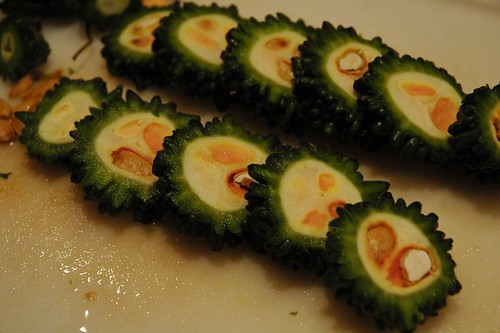
Cut in half, then remove the seeds
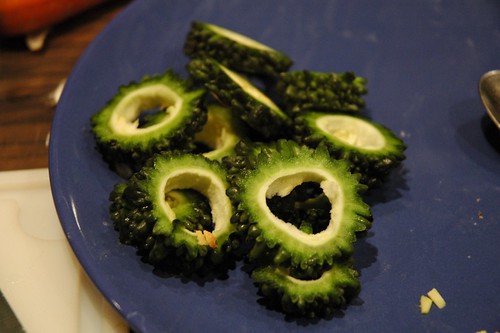
bittermelons waiting to be stir-fried
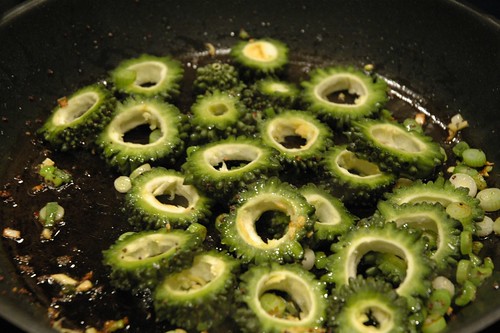
Karela with garlic, ginger, onions, and mustard seeds.
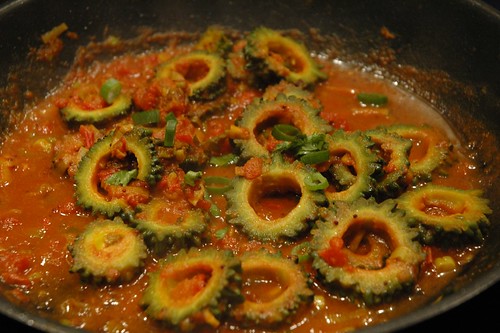
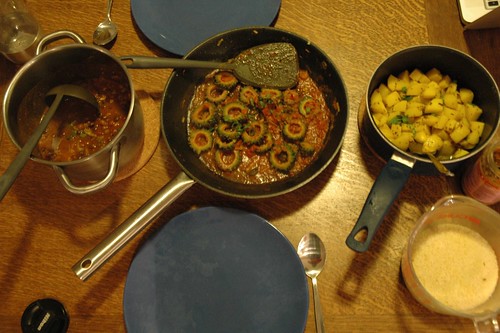
Served with some black chickpeas and couscous, and potatoes
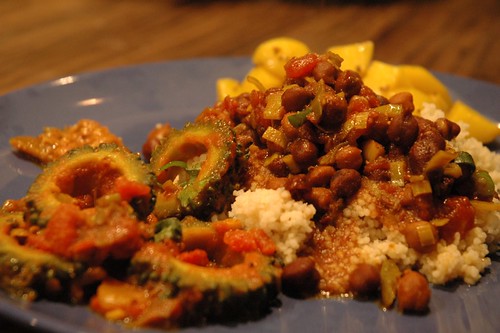
When was the last time you tried a totally new food? I recently retried eating bittermelon, or in Gujarati, karela (kha-reh-la). Bittermelons are a type of really bitter squash with a spicy, slightly pungent taste, that works to clear the palette. I think bittermelons taste very good with lentils and dhal.
Up for a bitter treat?
Growing up, bitter flavors were loved by my parents (fenugreek leaves called methi, bittermelon, unripe mangoes, pani-puri pani, vhal – a type of broad bean similar to limas, and even cilantro). Bittermelon is not exactly kid-friendly food. As kids, we'd explain how awful the bitter taste was, and how nothing could mask (we'd dip our veggies in ketchup, Cool Whip, drown it in yogurt, dhal, whatever) that awful mouth puckering bitter flavor. My parents, having a strict no food-waste policy, would force us to finish our plates. Begrudgingly, we'd finish the food, complaining all the while, and taking dollops of Cool Whip out (somehow this was allowed). All those years of forcing us to clean our plates did not create a terrible relationship with the foods we grew up eating, my siblings and I love food (sweet, sour, bitter and salty!) Now we force those foods on our friends and families.
Today, bitter foods do not bother me. I love methi theplas (a type of tortilla made with fenugreek leaves – and btw, mom, if you're reading this I need that recipe), and I have tried lambic guezes and other wild ales which are both sour and bitter. So why not try bittermelon again? Most Asian or South Asian stores carry them. Look for warty green spiky cucumber-like squash with no obvious bruising or wilting. Asians and South Asians LOVE bittermelon. This is a simple way to prepare them, and is my mom's way of prepping them. I served this with some black chickpeas, potatoes, and couscous.
Indians believe that bittermelon, and many bitter fruits and vegetables, helps to reduce or improve the symptoms of type 2 diabetes - and that their consumption can also work to prevent type 2 diabetes. They also believe that bitter foods help thin the blood, which results in less cardiovascular diseases.
Gujarati-style Bittermelon
(Karela ni shak)
Serves: 4
Ingredients:
2 small-medium bittermelons (4-6” long)
1 tsp olive oil
1 clove garlic, chopped
1 tsp, ginger, chopped fine
½ tsp mustard seeds
pinch of asafoetida or hing
½ cup onion, diced
½ cup water
1-2 tomatoes, diced (helps to cut down on bitterness)
salt to taste
½ tsp turmeric
½ tsp cumin
cilantro to garnish
Directions:
- Wash and cut the bittermelons in half. Cut the halves lengthwise and remove the seeds. You can also cut it into 1/2” segments and remove the seeds and white pith.
- Make a vaghar. A vaghar is when you heat up oil and add seeds and some spices to release their flavors. Vaghars are the lifeline of Guju cooking. Heat up the olive oil over medium heat. Add in mustard seeds and hing. When the mustard seeds begin to pop, add in ginger, garlic, and onions. Stir and cook.
- Add in bittermelon and stir fry for about 10 minutes. Add in water and add in salt, turmeric, and tomatoes. Continue cooking another 10 minutes.
- Add in cumin powder, stir to combine and garnish with cilantro. Serve.
